


ofek logo

מאמרים נוספים בגיליון

Issue #1 – October 2021

Digital KavOFEK #1

Editorial

We are delighted to launch the first digital issue of KAV OFEK.

In September 2000, the first issue of KAV OFEK was published.Avi Nutkevitch, who was the chairman of OFEK at the time, wrote, among other things, in his words of blessing:

“OFEK Writes” is of course another way to promote ideas, but it is primarily the creation of a space for the production of new ideas, for new conceptualizations, for further processing of experiences; It is another way to channel creativity; It is also another channel of communication between us and ourselves, between us and the world.”

Silvia Silberman and Ilana Litvin wrote in the editorial: After debates that ranged from excessive modesty to grandiose ambition, between the intention to publish a “dry” informative page and the desire to create a polished professional journal, the members of the committee decided to launch a journal that would encourage experiential and spontaneous writing even by those of us who shy away from writing for the established professional press.

The journal was published every year; grew, developed and expanded, and the members of its board also changed over the years. In December 2011, issue No. 12 was released, which was also the last. Since then, it fell asleep for ten years. The image of “Sleeping Beauty” waiting for the prince to come, give her a kiss, and wake her up from her slumber came up in the system.

The first thoughts about renewing KAV OFEK in a digital format, with the encouragement of OFEK’s board, came up over two years ago, even before the outbreak of COVID, and began with meetings between Sivanie Shiran and Yermi Harel. Sivanie was obliged to retire and a new editorial board was established which includes Eliat Aram, Yermi Harel and Shelly Sussman: on the editorial team of the first issues, on the editorial team of the middle issues and a newcomer to the board, respectively, hoping for a combination of old and new, tradition and innovation, an important issue in itself, in the field of group relations.

The theme of the issue, which turns the gaze to organization and organizing during the days of an epidemic, invites consideration of the effects of the epidemic on the new system that formed during this period. The digital acceleration in the days of Corona and the transformative change in the perception of location and space, removed limitations on a global society, which became “natural”. The technological tools also became “natural”, and the editors were helped by the available technology of Zoom, WhatsApp, email and shared files for the day-to-day work and communication with the article writers and other people who took part and helped in the production of the issue. Plans for an editorial meeting in Israel were canceled with the imposition of the lockdowns and movement restrictions, so that in fact, like many teams during this period, the editorial board operated in the online space and did not meet physically from its establishment and throughout the period of work on the magazine.

The Corona epidemic gave renewed validity to renewing the journal in an online format, one that is accessible and available beyond the boundaries of time, space and language, and invites expression in a variety of media and styles, such as video and visual images. As in the previous links in the KAV OFEK chain, in the renewed digital edition the wish is to provide a creative and playful space for engaging in the areas of OFEK’s knowledge, a space for conceptual and experiential expression, for collecting and processing experiences and for communication within the community of members and between it and the world.

This task is part of the contemporary challenge of searching for alternative ways and additional channels for meeting and dialogue. For example, KAV OFEK’s digital platform allows comments on the article page, as a channel of this type. Is it possible to think of a “hybrid model” in OFEK, which has some physical meetings, some online meetings and some on the online KAV OFEK? Time will tell.

The first part of the issue contains three articles dealing, from different angles, with the learning experience from online conferences or meetings about conferences. They all took place during the months of the epidemic. We opened with an piece by Ronit Kark and Miriam Shapira examining their experience as participants in the pioneer eGRC conference in 2020. The central theme, around the question or the feeling of omitting intimacy in a conference with digital authority, immediately stimulated thoughts in the editorial board and indeed we included a comment on the subject of omission by Yermi Harel.

The second piece is actually a collection of contributions from the director, staff members and participants of the online conference that took place in February 2021 and to which an OFEK evening was dedicated in June of this year, led by Smadar Ashuach and Amir Scharf, the content of which can be found here.

This part of the issue is concluded with a meta-learning article about learning from conferences through a series of Zoom meetings. The article was edited by Mira Erlich-Ginor who conducted three OFEK evenings on Zoom in the fall of 2020, between the waves of the Corona virus, with the primary task – learning from conferences. The second part of the issue also contains three articles, which deal with the question we presented in the call for proposals about OFEK as a host organization and the experience of leadership in its various shades and colors during the epidemic years.

We start with chairperson Yael Shenhav Sharoni’s view on the management of OFEK – the organization as an organization – in times of epidemic, physical distance and uncertainty.

We continue with a thoughtful article from an OFEK member, Gabi Bonwitt, about the group of OFEK members that examined group relations and Corona, in which he touches on issues we will return to later – memory, otherness and foreignness.

We conclude with the contribution of Leslie Brissett, director of the program for group relations at the Tavistock Institute London, who also sent an article thinking about identity, belonging and the digital experience in the days of an epidemic from his point of view as a director. This article also provoked deep reactions among the members of the editorial board and here you will find Shelly Sussman’s response to the idea of “a person in a body”.

The third and last part of the issue is dedicated to the memory of our dear friend Judy Levy who passed away prematurely before the epidemic. The memorial evening for her death in August 2019 at Yigal Ginat’s house in Jerusalem is perhaps one of the last memories before the epidemic of OFEK members getting together, talking, crying, remembering and singing Judy.

Here you will find a collection of interviews, some recorded, some written, of friends who remember Judy; Judy’s original article from 2011, “Memory Lost and Memory Found”, with her original response and with a contemporary addition from Gabriella Braun, a memory wrapped in sensitive, responsible and loving editing by Leila Djemal and Miri Tzadok.

It seems to us that maybe Judy is our sleeping beauty, helping us wake up and wake KAV OFEK. Although unlike in fairy tales, we cannot bring her back to breathe within us, we can try and carry on as she breathes from our memories.

We hope you enjoy the issue and that its various “kisses and caresses” will inspire you to contribute in the future.

The Editors,

Shelly, Yermi and Eliat
September 2021

* The editors would like to thank first and foremost, Ilan Kirschenbaum, for his partnership and assistance in the realization of the digital edition.

* To OFEK’s board, which approved funds that helped in the realization of the issue, especially in the editing of the recorded segments.

* And of course. to all the writers and contributors – there is no journal without content.

Issue #2 – November 2022

Digital Kav OFEK#2

Editorial

We are delighted to put forward Kav OFEK’s 2022 – the second digital edition. In preparing this edition, we could identify characteristics of doing something for the ‘second time’. In the second edition of Kav Ofek in-print, in 2001, Ilana Litvin, Silvia Silberman and Eliat Aram, the then editors, wrote:
“we are all familiar with the burst of energy that comes with beginnings, with a genesis. It is much harder to generate energy in order to persevere in creating and invest in maintenance”.

These similar feelings, that accompanied the preparation of the second edition echoed the title: “on longing, movement and nevertheless”. Inspired by the famous lyrics* pointing to the “ongoing journey” and the necessity to relentlessly “keep on moving”, we have wondered – what is the meaning of ‘movement’ these days, when the journey seems to go on and on, regresses, comes to a stand-still – how do individuals, groups, organisations, societies, communities move? Where do longing for human touch and closeness meet movement and moving? Where do we find the resources to keep on moving nevertheless and despite it all?**

We have recognised the circularity of movement in OFEK in the very recent GRC which took place with TAU entitled “Being a Therapist at this time” under the leadership of Yosi Triest and Moshe Bergstein. The GRC was cancelled twice during the pandemic, the journey extended, and eventually it happened this last September with a significant number of participants. What has been the place of longing, perseverance, determination, in the success of this GRC, despite it all and nevertheless?

The articles in this edition are also characterised by the circular movement of back and forth. The first cluster includes two articles dealing with insights from the Corona years, and relate to loneliness, movement and stuckness. First, a thought piece from Shmuel Bernstein dealing with loneliness and lack of movement, and – through re-examining Baudelaire’s La Solitude- offers a new perspective to think of the “empty space”. In the second thought piece, Simon Western touches on questions of loneliness, isolation and melancholy in the digital age, and discusses them through a case study of drone pilots in the USA air force.

The second cluster includes three articles emerging directly from OFEK-related activities and Group Relations thinking. The first, by Hagit Shachar-Paraira and Eyal Etzioni, examines sensitively and from the perspective of the participant, the processes in a reading group of systemic-psychoanalytic papers, which took place over a period of four years (including during covid and lockdown and a return to in-person), suggesting a relationship between learning/study and food/feeding. In the paper “tears of an administrator” which also deals with the experience of participating, Ori Weyl shares his experience of being a GRC administrator this past July with a touching humorous style. This section concludes with a thought piece from Gilad Ovadia which examines the addition of a fourth T boundary, in addition to the original three of Task, Territory and Time. He suggests that of reality Testing, which contributes the strengthening of movement between the ideal and the real in organisational work.

This edition is sealed with the contributions of two guest writers, asking us – “moving – where to?”
Gili Yuval, poet and writer dealing with the world of work, points to the tension between loneliness and a road-trip type movement, to the longing for solitude and suggests a ‘solution’ of a journey-to-nowhere.
Coreene Archer’s thought piece responds to the ancient song “keep moving on the ongoing journey” with contemporary voices and songs and challenges us to examine for ourselves questions of choice and internal listening.

Happy reading and please do use the comment boxes to share your reflections, questions and thoughts.

The Editors,

Yermi, Eliat and Shely
November 2022
* “Ze Kore” (It Happens) / Lyrics Shmulik Kraus
** Call for Papers Kav OFEK #2

Issue #3 – August 2024

Digital Kav OFEK #3

Editorial

In Kav OFEK, is “the despair becoming more comfortable”? The papers and collections in this third edition of Kav OFEK move between despair and hope and everything in between. So has been the editorial movement in our production work. We have found ourselves sea-soring back and forth, up and down, between frustration and despair, to hope and action. Our action is articulated through talking, thinking, opening up spaces where we can reflect on our experiences and memories.

The Kav includes two papers which had been written before 7th October 2023. In the first of these, Sarah Metzer and Corinne Zeevi-Weil explore the phenomenon of silencing and shame around the detention of Palestinian children. The second paper, a thought-piece by Gilad Ovadia, inquires into the sources of authority in Group Relations organisations and looks critically at the state of authority in OFEK.

A second paper by Gilad Ovadia also explores issues regarding work in GR organisations, which are based on psychoanalytic and socio-systemic thinking. This paper, which aims to understand the “analytic condition” in psychoanalytic-systemic work, discloses that it has been written in early 2024 and refers to the polarised situation in Israel, whilst stating the importance of the workspace, and the necessity of preserving the vitality of the analytic state.

The rest of the contributions directly relate to the events on – and following from – the 7th October 2023:

Simi Talmi shares her ‘live’ journal reflecting on the entry and integration of displaced survivors from the Otef Gaza communities into her own kibbutz community.

A recorded conversation with Leila Djemal on her contribution to the response effort and rehabilitation work with the Thai workers from the Otef sheds understanding about relationships between groups and other circles of influence that are shifting and expanding Israeli society’s borders.
A collection of thoughts and reflections from members of the Tavistock Community following an evening they called “Many Wars, One Peace – Many Lands, One Home”. The writers are from a range of countries including South Africa, Italy, USA, Canada, The Netherlands, Lithuania, UK and Israel. They bring various perspectives on their experience of borders, rights and conflict, both in preparation and during the event.

The pair of articles by Orly Aflalo-Kamil and Gabi Bonwitt refers to an OFEK evening entitled “draw me a dream please” that took place in May 2024, which hosted the illustrator and activist Zeev Engelmayer. The evening was a second meeting in a series dealing with the connection between Art and Society, inquiring into the role and functions of Art in various social contexts as a channel into the collective unconscious.

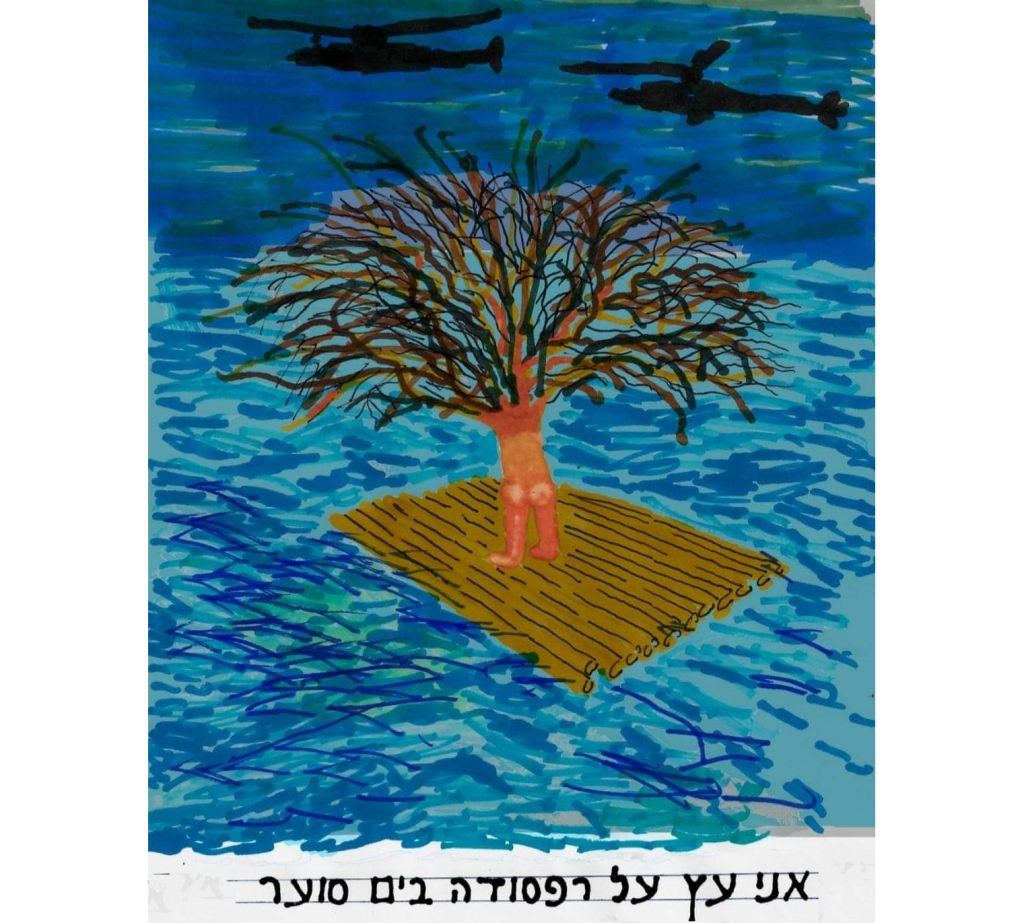
Most of this edition’s illustrations are by Engelmayer, which he calls “postcards”, and which reflect – we feel – a similar movement between hope and despair as we have felt and as is expressed in the various contributions.

Our deep gratitude to all the writers and contributors, to Ilan Kirschenbaum for placing so aptly this third digital edition, and to Zeev Engelmayer for allowing us to use his vivid postcards to connect our written words with Art.
Best wishes
Shely, Yermi and Eliat
The Editorial team
August 2024

Issue #4 – January 2026

Editorial

Letting go to letting be/ “when the home is empty, it doesn’t matter who is right” 

This edition started from a big emptiness – a depressed void – emotional, intellectual, social and political. We sent the call out in a time where splits seem to persevere over any attempt at connecting, healing or rehabilitating. Inside OFEK too there were exchanges characterised by the sound of the pencils being sharpened, and that old, familiar feeling of the need to be right, toppling the need to connect and make peace, was creeping up on us. The fourth edition of Kav OFEK stalled again then into silence. 

And then, yet again and despite it all, the editorial board continued. People started sending their promised contributions, including some where the context made us feel right to revive them, or to publish them again, as part of another frame.   The house started to refill, OFEK’s intellectual home began to shape up into what would become its fourth offspring. 

What can you expect to find in this edition? The publications are very different from each other, in form as well as in content. But they do have something in common. In different ways, they all deal with memory, death and dying; the study of the past in the present, including trauma and inter-generational trauma; and the painful yet hopeful inter-generational dynamics including succession and legacy:

We have a letter from Dr Mannie Sher, an OFEK father-figure, and  a TIHR elder, who is positively busy with legacy and who has recently published his personal memoir in the form of letters to his children and grandchildren (in-person book launch on 25 January 2026). On our request, he has written one such letter of wisdom to the OFEK offspring. We have a video interview of Prof Yigal Ginat, one of OFEK’s first fathers and a role-model to the profundity of the model of GR into all systems and organisational understanding and work. Speaking poignantly to Yermi Harel, Yigal takes us through a tour-de-force of a life-long activity in health and social care informed by the GR principles and thought, and including reflections on personal loss, grief and solitude. 

A thoughtful and thought-provoking piece entitled ‘The Fourth Injury’ by Nimrod Harel suggests that technology, with the fast developments in AI, constitute the fourth injury, should Freud was alive today to have defined it (Freud identified three core narcissistic injuries to the Human species as offered through scientific developments over the centuries: cosmological, biological and psychological). This article swims across a couple of generational rivers: human development and the examination of AI – so we include two responses to Nimrod Harel’s paper, one by Dr Kobi Tadmor and one by AI itself. The other generation river is the personal one: Nimrod is the son of Dr Yermi Harel, one of OFEK’s senior members as well as one of Kav OFEK’s editors. Here, the creative, fruitful, satisfying and proud-making aspects of succession and generational discourse. 

The contribution from Batel Friedman is a self-reflection on the experience of being an Other, in OFEK, and the pain and vulnerability that accompany. It is a striking article that highlights that “even” in OFEK, that is supposed to be an inclusive and pluralistic society, the experience of Otherness, and othering is very alive. Bat-El is a younger member of OFEK both by age and by years of membership so here, again, the dynamic of the generations appears. 

Gali Goren (et al) describes and reflects on two workshops conducted ‘under fire’ during 2025 with the primary task of digesting experiences of separation and endings, as a result of war. The work was commissioned by a charity called ‘for tomorrow’ that asked the team to run further workshops on this issue as well as on ‘moral injury’, a traumatising experience that occurs when a person is exposed to events that challenge their  values and principles, an injury that often occurs in war and conflict situations, where persons are at risk of dying.  

Yael Sharoni (et al) returns to reflect and draw lessons from a workshop alerting that corruption is not only a social phenomenon but a symptom to a deep and problematic social disease. The event took place eight years ago and feels like a premonition to what was to come. An eerie reminder of how we do not learn from our history, or past, and repeat or even expand our mistakes. 

A conversation between Gilad Ovadia, incoming and current Chair of OFEK, and Yoav Kirsch, outgoing Chair of OFEK and current Company CEO, explores the vulnerability and potential injury as one reflects on the transitions between different leadership roles. In a heart-to-heart, a man-to-man reflection shows the humanness in succession and transition. 

And finally, Orly Aflalo-Kamil rounds up the contributions to the book Sitting on a Suitcase by seven OFEK members  in a gentle and sensitively led conversation based on the book’s main hypothesis which is that Jewish identity – being an ongoing psychological experience shaped by a history of persecution, migration, and intergenerational trauma – has shaped the professional choices of the writers. 

We called for contributions in the spirit of Bion’s reverie, without memory or desire, and what has emerged is that and more, a rich tapestry of memories, re-membered experiences re-thought and re-integrated into a present which has freshness, hope and possibility in a context which could have hardly been any darker. 

We trust you will enjoy reading, watching and listening, and feel the weaving together warming you up on these cold winter nights.   


Orly, Shely, Yermi and Eliat

The Editorial Team
January 2026

Cheese board

המארגן הרביעי – המפגש עם המציאות

גילעד עובדיה

“כל התיאוריות הן אפורות ידידי. עץ הזהב של החיים ירוק הוא” ( ‘פאוסט’ גתה)

רבים מאיתנו נוהגים לציין שלושה איפיונים מארגנים לכל יחידת עבודה המגדירים בפועל את הגבולות שלה ומקנים תפיסה של סדר או מסגרת. הכוונה לשלושת ה-T : זמן Time -, מקום – Territory ומשימה מרכזית Task primary) Task – ). בטקסט זה אבקש להציע בקצרה את ה-T הרביעי כמארגן נוסף המתייחס למפגש ההכרחי עם המציאות – Testing of reality, אפשר לאמר המארגן של תפיסת ההקשר.

בבואנו להגדיר יחידת עבודה אנו שואלים שלוש שאלות סגורות: מהי הגדרת הזמן? היכן היא תתבצע? ומהי המשימה המרכזית של יחידת עבודה? שלוש התשובות על שאלות אלו מארגנות באופן ברור ככול האפשר של נקודת המוצא של תהליך העבודה. אולם שלוש שאלות אילו אינן מספיקות אלא כנקודת מוצא. השאלה שהתשובה עליה חלקה יש לתת עליה את התשובה מראש וחלקה תוך כדי עבודה היא מה ההיקשר של יחידת העבודה או מה המציאות שבתוכה יחידת העבודה הזו משתלבת?

ההצעה המובאת בטקסט זה להוסיף את מארגן ביקורת המציאות TESTING OF REALITY כ-T הרביעי בבחינת המשמעות של כל יחידת עבודה, לא נולדה ביום אחד. בעיקר מדאיגה אותי החוויה שלי באפק, אך גם במעט ההתנסות הבינ”ל שנטלתי בה חלק, של התפתחות של נורמה של שימוש בשפה ארגונית משטיחה, סגורה ומצמצמת. חלק מתחושה זו נובע מהקלות שבמעבר בין ביצוע של סדנאות למטרת למידה, לבין טקסיות שעשויה להיות או להתפתח לפעולה מרוקנת מתוכן, בבחינת “מצוות אנשים מלומדה”. יש חשש שהעיסוק בשאלה: האם דרך מסויימת היא לפי המסורת של טויסטוק או לא? האם נהוג לעשות כך או אחרת? שאלות כאלו עשויות לאבן את הדרך שבה אנו הולכים.

ביקורת המציאות TESTING OF REALITY – כעקרון המארגן הרביעי.
את המאפיינים המארגנים, הזמן, המקום והמשימה נוהגים לבחון במונחים של גבול ובמובן זה הם יציבים וקבועים מראש. לעומתם נדרש ממד מארגן של שאלה פתוחה. מי המשתתפים? מי בעלי התפקידים? מה האמצעים שעומדים לרשות יחידת העבודה? היכן היחידה ממוקמת ביחס ליחידות העבודה האחרות? מה ההקשרים שהולכים ומתפתחים תוך כדי יחידת העבודה? שאלות פתוחות כגון אלו משקפות את הפתיחות והזרימה שיש בין פנים יחידת העבודה לבין החוץ שלה.

במהלך השנים מצאתי כי בדיקת המציאות המתמדת מאפשרת לנוע בתוך גבולות הזמן, המרחב והמשימה באופן משוחרר יותר, תוך מודעות לנתקים המתרחשים כל העת בתוכנו ומסביבנו במאמץ לשמור על הכיוון כשנצמדים למשימה. המצפן האנליטי אמור לעזור לנו להתבונן פנימה לתוך התהליכים הקבוצתיים המודעים והבלתי מודעים. עלינו לשמור על הכיוון באמצעות החקירה של התנועה בין הנחות הבסיס לקבוצת העבודה וכיצד קבוצת הנחות הבסיס מסיטה את העבודה מדרכה הבלתי סלולה לעבר ביצוע המשימה המרכזית. אולם באותה עת עלינו לבחון היבטים ממשיים של המציאות המשפיעים על ההתרחשות מבפנים ומבחוץ ומשתנים כל העת.

בקבוצת חקירה על עבודה שיתופית שערכנו בחבל אילות עלתה השאלה המטפורית איך מנווטים בלילה חשוך נטול כוכבים? השאלה היכן אנחנו ביחס לעצמנו ולסביבה, הינו עקרון נוסף דרכו ניתן להתייחס לכל פעולה ופעולה במישור הארגוני והקהילתי. הצעה להוסיף את שאלת בדיקת המציאות, שיתכן והיא בבחינת המובן מאליו הלא מדובר, או אולי אפילו “הידוע שאינו נחשב” במונחיו של בולס, נבחנה כהתערבות מועילה בהקשרים שונים של חקירה ארגונית. אוסיף על כך עוד היבטים.

נניח וזה עתה סיימנו לתכנן את מסגרת הזמן, המקום והמשימה המרכזית של יחידת העבודה. אך האם בדקנו האם אכן היא עדיין אפשרית? האם עומדים לרשותנו המשאבים הנדרשים אליה? מה ההקשר שלתוכו אנחנו נכנסים, מהי ההיסטוריה הרלוונטית, כולל זו הטראומטית המשתלשלת כשובל, או חבל טבור מכל מה שקדם או עומד לצד המשימה?

בכל נקודת זמן שאנחנו מתבוננים בתהליך הוא כבר במצב עברי כלשהו . משהו התרחש קודם לכן. העבודה על המשימה אינה מנותקת “ממודיעין כוחותינו”. וכן, ככול שהלחצים הארגוניים כבדים יותר, הציפיות והמשאלות לתוצאה גדלים, המורכבות בביצוע המשימה הולכת ומסתבכת. כך, בהיעשר בחינה מתמדת של המציאות, והכנסת המידע לתוך השיח, הולך ומתפתח ערפל ארגוני מסיבי יותר. פעולת ביקורת המציאות המתמדת, יצירת עוגנים והישענות על עובדות היא בעלת חשיבות יתרה. כיוון שחלקים גדולים מההתרחשויות שסביבנו אינם לנגד עינינו הרי שאיסוף העובדות כבסיס להשערות הוא הכרחי. ככול שעברו השנים כמשתתף וכיועץ גיליתי שבדיקה מתמדת של המציאות המתחילב בבדיקת המסגרת: היכן אני נמצא? מה השעה? מה המשימה? ומה באמת קורה בפועל בקבוצה, איתי וסביבי הם כלי ההתמודדות של עם הכאוטיות המלווה כל התרחשות. השאלה האחרונה רלוונטית במיוחד כאשר על קבוצת העבודה להכין תוצר מוגדר שאינו רק רעיוני כגון ללמוד על תהליכים מודעים ולא מודעים…… . שאלת המציאות מתחדדת כאשר במקביל למשימת למידה נידרש תוצר כגון הכנה של ארוחה, הכנה של פעילות, ניהול תקציב או כל משימה מוגדרת וממשית אחרת כפי שקורה בכל מקום עבודה.

אין לי ספק שהתחדדות היחס לממשי, לקונקרטי ולהיבטים הלא מילוליים של תהליכי עבודה בקבוצה התפתח מאוד כתוצאה מההשתתפות החוזרת בסדנאות “ללמוד מהפעולה”. במציאות היומיומית לכל קבוצת עבודה יש ריבוי משימות המחייבת גמישות רבה בהתמודדות של מי שמנהיג, מנהל, מוביל וגם מייעץ. על עבודת היועץ בפעילות כתבתי את הפרק בספר על הסדנאות ללמוד מהפעולה בעריכת הינשלווד ומינגרלי.

כאמור, המחשבה על ה-T הרביעי הינה התפתחות של הבנה או הערכה, הולכת ומצטברת ששאלת ביקורת המציאות אינה חלק מהמתודולוגיה האנליטית-מערכתית באופן שיטתי. אנו אוהבים להשתמש במושג “ראיות” כבסיס להשערות העבודה על מצב הקבוצה. “הראיות” משקפות את התצפיות שלנו על תופעות שאנו משייכים כביטוי של התהליכים הלא מודעים בקבוצה. אך העובדות המצטברות כוללות סוגים שונים של ראיות: פערים ביחס לביצוע המשימה המרכזית, בחינת הקשר בין המשימה למשימות משנה או התפתחויות מהמשימה המרכזית, מצב המשתתפים והיבטים של המצב הכללי של “רעשי רקע” המשפיעים על ההתרחשות. בעידן הסלולר אין יותר מציאות “סטרילית” בעבודת הקבוצה והגבול בין התרחשויות פנימיות וחיצוניות הינו חדיר ומופר. יותר ויותר מופיעים רגעים בחיי הארגון והקהילה שבהם המנהיגות, ההנהלה והמשתתפים מתחילים להיות נגועים בנתקים ודיסוציאציות. יתכן וכי הדבר קשור להצפה של גירויים גלויים וסמויים, המעלים השפעות של חוויות טראומטיות, של דיסוציאציות אשר עשויים להיות מעין מחלה קוגניטיבית המתפשטת בתוך הארגון.

נראה כי אנו עדים יותר ויותר למצבים של הצפה ורוויה בתוך המערכות הארגוניות. מצבים אלו יכולים לנבוע משורה רחבה של תופעות הקשורות במורכבות, החל מטעויות של ההנהלה בתכנון, סתירות בטקסטים ובמסרים, בהגדרת משימות, בנהלים ובהנחיות. הדיסוציאציות יכולות לנבוע מהיעדר שיטתיות של ההנהלה בבניית תמונת המצב הארגוני. עיסוק של כל קבוצה, כולל ההנהלה בעולם הפנימי של כל יחידת עבודה יכולה לפרום את מערך העברת המידע בארגון המתפתח. לעיתים טעויות של בודדים עוברות כמידע אמיתי ומגבירות את הדיסאינפורמציה. יש להתפתחות היסודות הדיסוציאטיביים הללו סיבות מגוונות מאוד המתחילות ביחסי העצמי והתפקיד של המובילים, ועד לאופנים שבהם תופיעה חזרתיות של חווית טראומה ארגונית מפרקת, המותקת ונודדת מיחידת עבודה אחת לאחרת. מנהיגים הסובלים בעצמם מפוסט – טראומה עשויים ליצור ארגונים הנתונים לדיסוציאציות ופיצולים. למול המוצפות והרוויה ההולכת וגוברת, למול הנתקים והדיסוציאציות נידרשת כל העת ‘פעולה מתקנת’ בצורת בדיקת המציאות ובחינת ההיקשר.

שאלת ביקורת המציאות קשורה מאוד למשאבים, פרטניים וארגוניים. כחלק מהתפתחות הסדנה ללמוד מהפעולה, הוחלט על הכנסת כסף ממשי בצורת תקציב לפעילויות אותו נדרשים המשתתפים לבקש מהגזבר. הכנסת התקציב כמציאות קונקרטית הוביל לעלית חומרים חדשים ואיתם גם השלכות בעלות משקל. למשל כשמשתתף בישראל הינהיג את נושא בקשה וניהול התקציב בקבוצתו, עלה הדימוי השלילי, הגזעני יש לאמר, של שיילוק מה”סוחר מונציה”. ממשות הכסף העלתה מעל פני השטח חומרים שקודם היה קשה לזהותם.

זכורה לי התערבות קצרצרה של זהיד חוסיין בכנס שבו הייתי בהודו. היינו שלושה משתתפים בחדר, עבדנו על המשימה ופנינו בבקשה לייעוץ. זהיד הגיע לחדר ושאל אותנו מדוע פנינו לבקשת ייעוץ? האם אנחנו בטוחים שמיצינו את המשאבים העומדים לרשותנו? השבנו בחיוב ובתגובה הוא הסב את תשומת ליבנו שישבנו באפלולית כשמנורת החדר כבויה. צורכי התלות גברו ככול שהניתוק מהמציאות גדול. כשהלך, הדלקנו את האור, המשכנו לעבוד עי תכנון חלוקת העבודה בינינו, כך שהתפצלנו וחלקנו התחיל לתקשר עם שאר חלקי הארגון. באותה סדנה הזדמן לי לקחת חלק בקבוצה שחוסיין ייעץ לה באירוע הבין-קבוצתי. אחת מצורות הייעוץ היו הפנית תשומת לב הקבוצה לחלוקת תפקידים, לזמן החולף ואוזל תוך כדי העבודה כמימדים פרגמטיים. זכור לי שחוויתי זאת כהתיחסויות פותחות לחשיבה והתבוננות שלא עסקו באידאלים המתפתחים בקבוצה אלא בצד החיבור למציאות.

כדי להמחיש עוד התערבות המבוססת על מארגן בדיקת המציאות אביא דוגמה משל עצמי:

כיועצים באירוע ארגוני, נתבקשנו לייעץ למפגש בין הקבוצות. המפגש תוכנן והונהג בהובלת קבוצה שנקראה ה”מנהיגות”. כשהגעתי לאולם יחד עם יועץ מקבוצת האימון, התיישבנו והקשבנו למספר רגעים בהם עלה שהקבוצות ניסו לברר בינן לבין עצמן, איך יוכלו לשתף פעולה. אולם כצופה נראה היה שזו משימה קשה או בלתי אפשרית לנוכח כמות המשתתפים שנכחה באולם שהיתה של רוב משתתפי הסדנה. הקבוצה המזמינה התיישבה בשורה ישרה כאילו היו ההנהלה . שתי קבוצות נוספות הגיעו במלואן ושתיים אחרות כמחצית. נראה היה שהעודפות בחדר עצומה. אחד המשתתפים אמר שיש 39 משתתפים בחדר בעוד שבפועל לא יכלו להיות יותר מ 36 סך כל המשתתפים בכנס.

נראה היה לי שמבלי קשר למקום, לזמן ואפילו למשימה, האירוע היה כמו מפגש ניצולים מטראומה שככול הנראה התרחשה בראשית האירוע הארגוני. אחת הקבוצות קראה לעצמה פליטים קבוצה אחרת קראה לעצמה “שיבוש”. נראה היה שעד לאותו הרגע המציאות נהייתה כה כאוטית עד שאפילו תפיסת הכמות של המשתתפים נשארה לקויה לחלוטין, לא ברורה ולא מוגדרת.

בתגובה למצב הכאוטי העליתי בפני הנוכחים את האפשרות שמעבר להגדרת מסגרת הזמן של המפגש, המקום והמשימה ליצור שיח בין קבוצתי, לא נלקחה בחשבון התמונה המציאותית כגון: עם כמה נציגים מכל קבוצה אפשר לקיים דיאלוג? הצעתי להם את שלושת ה-T המוכרים בנוסף לשאלה האם הם בודקים את המציאות במובן זה שהמידע שמתקבל הוא אמין ומבוסס או לא? איך קורה שממשהו מדבר על 39 משתתפים ואיש לא מתקן אותו שיש לכל היותר בכנס 36. מובילת השיח באותו הרגע “המנהיגה שבחדר” חוזרת על הטעות. הוספתי ששתי קבוצות מהחמש הגיעו במלואן מה שאומר שכמות המשאבים המושבתים של הארגון עצומה.

משתתפת של קבוצת הטי, שייצגה לכאורה עמדה מרדנית כמנהיגת קבוצת ה”שיבוש”, תיקנה אותי. היא חידדה את תמונת המציאות בכך שהוסיפה שקבוצת “המנהיגות” זו שארגנה את כל המפגש ישבה גם היא כולה ללא התחשבות בעיקרון הייצוגיות, כך ששלוש מחמש קבוצות היגיעו במלואן.

עד לאותו הרגע המפגש עמד לכאורה בשלושת המארגנים של זמן, מקום ומשימה. אולם השאלה: האם זו פעולה מחוברת להיקשר, למשאבים, וליעילות השיח לא נשאלה. הכנסים כמו גם המציאות נגועים ברמות גבוהות של ביטויי נרקיסיסים: כגון איך אנחנו ניראים, הביצוע ועימו חרדת הביצוע, תחרותיות במגוון היבטים ועוד. הנרקיסיזם על מערכת האידאלים המכוונת אותו נמצא הפוך לקוטב המציאות. כך ככול שהתהליכים מתפתחים בכיוונים המונעים ע”י הנרקיסיזם כך גם החשיבות בשאלת ביקורת המציאות הולכת וגוברת.

מבלי להרבות בדוגמאות אסכם ואומר כי ה-T הרביעי הינו מארגן דינמי שאינו קבוע מראש. בדיקת המציאות הינו עקרון מארגן חי המתקיים כשאלה פתוחה המעמידה כל העת את יחידת העבודה למבחן המציאות. מהי בדיקת המציאות זו שאלה בפני עצמה. יש בה שילוב בין ראיית הפרט בקבוצה המבוססת על התבוננות עצמית, בדיקת החיבור שלנו להיותנו סובייקט בתוך תפקיד מצד אחד. מצד שני בממד הקבוצתי נדרשת התבוננות על מצב “כוחותינו” למול הזמן המקום והמשימה תוך הצבת שאלות לגבי ההיקשרים והמציאות הסובבת. קיים צורך בהתבוננות החוצה וראית המשימה בתוך רצף וסביבה לשם ויסות וניהול המשאבים וכן לזיהוי ההזדמנויות למול הסיכונים.

“תרבות ארגונית אידאלית” לעומת “תרבות ארגונית מציאותית”

“המשחק” “כנס יחסי קבוצות”, ככול משחק עשוי לפנות לקוטב האידאלי. יש לו כללים מוגדרים, הוא “מלאכותי” והשאיפה לשחק אותו ובו נכון, על פי הכללים, ניראת מובנית מאליו. “המשחק” מבוסס על יצירת מציאות נפרדת, מעין אי המופרד ממהלך החיים היומיומי של הצוות והמשתתפים. הארגון הזמני שואף לניתוק של הצוות והמשתתפים מ’החוץ’ שכאלו מפריע להתפתחות המואצת של היחסים ההשלכתיים בתוך הכנס, יחסים המהווים את חומר הגלם ללמידה האינטנסיבית.

מה קורה לתרבות אירגונית המתפתחת סביב “המשחק”? לא אחת אנו אומרים באפק, שאפק נבנה כאילו על בסיס המשאלה ל”משחק” מתמשך. כאילו הקהילה נבנתה כארגון ששואף להתנהל כאילו היה המשכו של הארגון הזמני בצורת כנס יחסי קבוצות שבו הנהלת אפק הינה מושא להשלכות כמו בהנהלה של כנס. ההשלכות שמיובאות משם, מכנסים בהם השתתפנו, יחסי ההעברה, מוכנסים לתוך הקהילה האפקית בלי גבול ברור. נראה כי בשנים האחרונות מגמה זו הולכת ופוחתת. נראה שההפרדה בין אפק כקהילה מקצועית לבין הכנסים כפעולה מקצועית מוגדרת ונקודתית, הולכת ומתפתחת ליחסים מורכבים יותר. מארגן המציאות קיים בסופו של דבר תמיד גם אם לא קראו לו כך. נראה כי בשנים האחרונות יש נכונות הולכת וגוברת לתת לו ביטוי גלוי ובפועל.

דומני שהשאיפה לקדם התפתחות מקצועית המבוססת על אידאלים ארגוניים “טהורים” היו חלק מהתרבות הארגונית שהתפתחה באפק. תרבות מקצועית השואפת לאיכות ומצוינות עשויה לרצות להתרחק משאלות של המציאות המפריעה כביכול ללמידה, ולהתמקד בעשיה איכותית שאינה רוצה להתפשר עם המציאות. נראה כי להתנגשות בין אפק כארגון עם תרבות ארגונית “אידאלית”, לבין המציאות, היו תוצאות מעניינות ופוריות.

לאפק היתה ויש משימה מרכזית – זו הכתובה באתר הבית שלנו. אולם איך קרה שמאז שאפק הוקם בשנת 1985 כאשר היצירתיות של חברי אפק פגשה את המציאות הפנימית שלו כארגון מצד אחד, ומצד שני במציאות החיצונית התגלו הזדמנויות ואתגרים המצריכים משאבים חדשים, התפתחו ענפים שנבעו מהמשימה המרכזית של אפק ויכלו להיות חלק ממנה אך נהפכו לפעילויות עצמאיות? האם מדובר בפרשנויות שונות למשימה המרכזית של אפק או שקורה משהו במפגש שבין רעיונות, מטרות, למימושם? עובדה שיוזמות חשובות מאוד שהיו לכאורה חלק מהמשימה המרכזית מצאו את מקומן מחוץ לאפק כארגון, ובמובן מסויים נשארו בתוך אופק כקהילת אנשי מקצוע הפועלים במקביל בתוך אפק ומחוצה לו. ארבעה פרויקטים חשובים וכבדי משקל צמחו במהלך השנים מתוך אפק ע”י או בשותפות מרכזית של חברי אפק. בשנת 1993 הוקמה עמותת “בסוד שיח” “לקידום דיאלוג בין קבוצות קונפליקט בישראל”. ב-1996 יצאה לדרכה התוכנית הראשונה לייעוץ ופיתוח ארגוני: בגישה פסיכואנליטית-מערכתית. בעקבות כנסי היהודים גרמנים בנצרת 1994 הוקם ב-2007 ארגון ה-PCCA. החל מ-2003 התחיל להתקיים הכנס המדעי של עולם יחסי הקבוצות אף הוא ביוזמה של חבר אפק. מדובר בארבע התפתחויות שלקחו מימדים חשובים בעולם הקבוצות ויצרו להם בתים נפרדים. בית לקונפליקטים בתוך החברה, בית לקונפליקטים בעיקר בין מדינות ועמים עם דגש על העיסוק בטראומה, בית להוראה ולמידה שיטתית של הדרך ובית לתוצרים המדעיים של עולם יחסי הקבוצות גם יחד.

אפשר היה לאמר שארבעת הפרויקטים כמו גם פעילויות אחרות הן נגזרות של המשימה המרכזית שהתפצלו מתוך המגע שלהם עם המעטפת האטמוספרית הסמויה שלו כארגון. המגע בין משימה למימוש שלה במציאות יצר הזדמנויות להתפתחות שלא היו אולי חלק מהתרבות הארגונית ששאפה להישאר “טהורה” או אידאלית. כך יוזמות אלו נדחפו החוצה תוך כדי שעליהן להתגבר על כוח הכבידה הארגוני כדי שתהיה להן תנועה וחיות משל עצמן.

כל הפרויקטים יכלו להיכלל תחת המשימה המרכזית של אפק אך תהליכים שונים הובילו אותם החוצה תוך שאפק במובן מסוים מוותר עליהם בהיותם מקור לקונפליקט, תחרות ועוד בין החברים. התנגשות זו עם המציאות כוללת את עולמם הפנימי של היוזמים, המשאבים האישיים ואחרים הדרושים לקידום יוזמה, כמו גם מגוון היבטים של ההקשר. האופנים שבהם דמיונות ומחשבות על מימוש היוזמה פוגשים את השותפים הפוטנציאליים, המכשולים, האיומים והסיכונים בניסיון לעבור באופן פשוט מרעיון לביצוע כל אלו מתרחקים מהתרבות הארגונית ה”אידאלית”.

אני מבקש להציע מה שקרה ליוזמות באפק אולי משקפת מסורת יהודית ארגונית רבת שנים ביחסי פנים וחוץ. אפק עצמו נשאר כמעין קהילה המהווה אבן יסוד בתנועת יחסי הקבוצות, אך גם ישות שיש בה משהו שאינו מתערבב, אולי בדומה לתנועה הפסיכואנליטית שגם בה דומני יש יסוד דומה. האם יתכן שהסיבות לכך הן מוצאנו כיהודים שמזה כאלפיים שנה פתחו מסורת ארגונית קהילתית שאינה מתערבבת בממסדים מקומיים שאינם יהודים? התפיסה היא שהמפץ גורם לתנועה החוצה כזו שתשמור על טוהרה פנימה. טוהרת הרעיון, הדרך והקבוצה. כך גם חוסר הרצון לגיור וגרים ביהדות – “קשים היו גרים לישראל כספחת”. היהודים קיימו מאז חורבן הבית השני, אורח חיים הכולל ממסדים קהילתיים שכללו בתי כנסת, בתי דין מקומיים, ישיבות ותלמודי תורה ומערכת לניהול חיי קהילה באמצעות מיסים מקומיים לצורכי קיום המנהיגות, טקסי מעגל החיים, עזרה הדדית ושמירה על דיני הכשרות. בשונה מהנצרות שלא אחת לקחה חלק בשלטון המדינתי עצמו, בדרגות חיבור ומעורבות שונות הרי שיהודים פתחו מתודולוגיה ארגונית קהילתית בלתי תלויה, זאת על בסיס בחינה מחודדת של הקשרים של המציאות. השאלה היהודית הקהילתית היתה תמיד: מה אפשרי ומה בלתי אפשרי? מה מקורות הכוח, המשאבים הכלכליים והיחס לחוקי המדינות שבהם היו יהודים היו עקרונות מנחים להישרדות רבת שנים צנועה לרוב, עם תלות חלקית בממסדים המקומיים.

העיקרון של ערנות, קרבה למקורות הכוח המקומיים ושמירה על נפרדות היו קו מנחה אצל יהודים. סבתי שהייתה הספרית של המלכה הבולגרית יחס עם עוד כמה יהודים יצאו מבולגריה תוך כדי המלחמה מתוך בהירות בתפיסת המציאות. רק בנס ניצלה יהדות בולגריה כתוצאה מקרבת מספר יהודים לשלטון בעוד שהמלך עצמו נירצח ע”י הגרמנים. במילות הפרידה שלו לסבתי בעמדו על גרם המדרגות האחורי בארמון הוא אמר לה: “את תצאי מכאן חיה , אני לא”, וכך היה.

אי התלות היה עקרון מארגן בקהילות של יהודים מה שתרם להישרדותם, או אולי גם לחולשתם בעת השואה. שיטת ביקורת המציאות היהודית היתה שמירה חזקה על גבול בין המציאות הקהילתית הפנימית לבין הקשר אל הסביבה. המשמעות של פעילות ייחודית זו שאין לה אח ורע בתרבויות העולם התבססה על ביקורת מתמדת של המציאות הסובבת, ויכולת לפענח היקשר. במקום שמבחן המציאות כשל כך גם נגרמו נזקים גדולים. דוגמה לזליגה של דבקות בעקרון המציאות הייתה תנועת השבתאות במאה ה-17. היא נחשבה לגורם מפרק של הקהילות היהודיות באירופה, בשל ההיבט המשיחי שלה המתרחק מהמציאות ולכן נלחמו בה. האם התפיסה שמה שחדש כדאי להפנות אותו החוצה אינה חלק מהתשוקה ל-EXIT על פני יצירת חברות ישראליות גדולות וגלובליות?

אם נשוב לאפק הרי שיצירתיות זו של חברי אפק התנגשה עם המודל הארגוני האידאלי והטהור של ה”משחק”. כך נוצר יחס כפול למציאות. היוזמות נידחו החוצה באופן פאסיבי ואולי “לא-מודע” עי הממסד הארגוני, בעוד שהיוזמים מצאו בקרב קהילת החברים שותפים לדרך. נדרשה תנועה והעברה של המנהיגות בין דורות כדי שהיחס למשימה המרכזית במפגש שלה עם מציאות פנימית וחיצונית יוביל לשינוי. נראה כי בעשור האחרון, אפק עוברת תהליך של שינוי שמכוון פניו בתנועה מה”משחק” למציאות כרצף ולא כהפרדה בין הקהילה האידאלית לבין החיים עצמם.

לסיום

בחינת הפעילות בכל יחידת עבודה באמצאות מארגן מבחן המציאות, ה-T הרביעי, מאפשר להתבונן בשאלה עד כמה הקבוצה בכל יחידת עבודה פונה למימוש המשימה המרכזית דרך הקוטב האידאלי או המציאותי. הצבת השאלות הנגזרות ממארגן המציאות תורמת בכך להבנה של אופן הפעולה של קבוצת העבודה.

Leave a Reply

Your email address will not be published. Required fields are marked *