
ofek logo

מאמרים נוספים בגיליון

Issue #1 – October 2021

Digital KavOFEK #1

Editorial

We are delighted to launch the first digital issue of KAV OFEK.

In September 2000, the first issue of KAV OFEK was published.Avi Nutkevitch, who was the chairman of OFEK at the time, wrote, among other things, in his words of blessing:

“OFEK Writes” is of course another way to promote ideas, but it is primarily the creation of a space for the production of new ideas, for new conceptualizations, for further processing of experiences; It is another way to channel creativity; It is also another channel of communication between us and ourselves, between us and the world.”

Silvia Silberman and Ilana Litvin wrote in the editorial: After debates that ranged from excessive modesty to grandiose ambition, between the intention to publish a “dry” informative page and the desire to create a polished professional journal, the members of the committee decided to launch a journal that would encourage experiential and spontaneous writing even by those of us who shy away from writing for the established professional press.

The journal was published every year; grew, developed and expanded, and the members of its board also changed over the years. In December 2011, issue No. 12 was released, which was also the last. Since then, it fell asleep for ten years. The image of “Sleeping Beauty” waiting for the prince to come, give her a kiss, and wake her up from her slumber came up in the system.

The first thoughts about renewing KAV OFEK in a digital format, with the encouragement of OFEK’s board, came up over two years ago, even before the outbreak of COVID, and began with meetings between Sivanie Shiran and Yermi Harel. Sivanie was obliged to retire and a new editorial board was established which includes Eliat Aram, Yermi Harel and Shelly Sussman: on the editorial team of the first issues, on the editorial team of the middle issues and a newcomer to the board, respectively, hoping for a combination of old and new, tradition and innovation, an important issue in itself, in the field of group relations.

The theme of the issue, which turns the gaze to organization and organizing during the days of an epidemic, invites consideration of the effects of the epidemic on the new system that formed during this period. The digital acceleration in the days of Corona and the transformative change in the perception of location and space, removed limitations on a global society, which became “natural”. The technological tools also became “natural”, and the editors were helped by the available technology of Zoom, WhatsApp, email and shared files for the day-to-day work and communication with the article writers and other people who took part and helped in the production of the issue. Plans for an editorial meeting in Israel were canceled with the imposition of the lockdowns and movement restrictions, so that in fact, like many teams during this period, the editorial board operated in the online space and did not meet physically from its establishment and throughout the period of work on the magazine.

The Corona epidemic gave renewed validity to renewing the journal in an online format, one that is accessible and available beyond the boundaries of time, space and language, and invites expression in a variety of media and styles, such as video and visual images. As in the previous links in the KAV OFEK chain, in the renewed digital edition the wish is to provide a creative and playful space for engaging in the areas of OFEK’s knowledge, a space for conceptual and experiential expression, for collecting and processing experiences and for communication within the community of members and between it and the world.

This task is part of the contemporary challenge of searching for alternative ways and additional channels for meeting and dialogue. For example, KAV OFEK’s digital platform allows comments on the article page, as a channel of this type. Is it possible to think of a “hybrid model” in OFEK, which has some physical meetings, some online meetings and some on the online KAV OFEK? Time will tell.

The first part of the issue contains three articles dealing, from different angles, with the learning experience from online conferences or meetings about conferences. They all took place during the months of the epidemic. We opened with an piece by Ronit Kark and Miriam Shapira examining their experience as participants in the pioneer eGRC conference in 2020. The central theme, around the question or the feeling of omitting intimacy in a conference with digital authority, immediately stimulated thoughts in the editorial board and indeed we included a comment on the subject of omission by Yermi Harel.

The second piece is actually a collection of contributions from the director, staff members and participants of the online conference that took place in February 2021 and to which an OFEK evening was dedicated in June of this year, led by Smadar Ashuach and Amir Scharf, the content of which can be found here.

This part of the issue is concluded with a meta-learning article about learning from conferences through a series of Zoom meetings. The article was edited by Mira Erlich-Ginor who conducted three OFEK evenings on Zoom in the fall of 2020, between the waves of the Corona virus, with the primary task – learning from conferences. The second part of the issue also contains three articles, which deal with the question we presented in the call for proposals about OFEK as a host organization and the experience of leadership in its various shades and colors during the epidemic years.

We start with chairperson Yael Shenhav Sharoni’s view on the management of OFEK – the organization as an organization – in times of epidemic, physical distance and uncertainty.

We continue with a thoughtful article from an OFEK member, Gabi Bonwitt, about the group of OFEK members that examined group relations and Corona, in which he touches on issues we will return to later – memory, otherness and foreignness.

We conclude with the contribution of Leslie Brissett, director of the program for group relations at the Tavistock Institute London, who also sent an article thinking about identity, belonging and the digital experience in the days of an epidemic from his point of view as a director. This article also provoked deep reactions among the members of the editorial board and here you will find Shelly Sussman’s response to the idea of “a person in a body”.

The third and last part of the issue is dedicated to the memory of our dear friend Judy Levy who passed away prematurely before the epidemic. The memorial evening for her death in August 2019 at Yigal Ginat’s house in Jerusalem is perhaps one of the last memories before the epidemic of OFEK members getting together, talking, crying, remembering and singing Judy.

Here you will find a collection of interviews, some recorded, some written, of friends who remember Judy; Judy’s original article from 2011, “Memory Lost and Memory Found”, with her original response and with a contemporary addition from Gabriella Braun, a memory wrapped in sensitive, responsible and loving editing by Leila Djemal and Miri Tzadok.

It seems to us that maybe Judy is our sleeping beauty, helping us wake up and wake KAV OFEK. Although unlike in fairy tales, we cannot bring her back to breathe within us, we can try and carry on as she breathes from our memories.

We hope you enjoy the issue and that its various “kisses and caresses” will inspire you to contribute in the future.

The Editors,

Shelly, Yermi and Eliat
September 2021

* The editors would like to thank first and foremost, Ilan Kirschenbaum, for his partnership and assistance in the realization of the digital edition.

* To OFEK’s board, which approved funds that helped in the realization of the issue, especially in the editing of the recorded segments.

* And of course. to all the writers and contributors – there is no journal without content.

Issue #2 – November 2022

Digital Kav OFEK#2

Editorial

We are delighted to put forward Kav OFEK’s 2022 – the second digital edition. In preparing this edition, we could identify characteristics of doing something for the ‘second time’. In the second edition of Kav Ofek in-print, in 2001, Ilana Litvin, Silvia Silberman and Eliat Aram, the then editors, wrote:
“we are all familiar with the burst of energy that comes with beginnings, with a genesis. It is much harder to generate energy in order to persevere in creating and invest in maintenance”.

These similar feelings, that accompanied the preparation of the second edition echoed the title: “on longing, movement and nevertheless”. Inspired by the famous lyrics* pointing to the “ongoing journey” and the necessity to relentlessly “keep on moving”, we have wondered – what is the meaning of ‘movement’ these days, when the journey seems to go on and on, regresses, comes to a stand-still – how do individuals, groups, organisations, societies, communities move? Where do longing for human touch and closeness meet movement and moving? Where do we find the resources to keep on moving nevertheless and despite it all?**

We have recognised the circularity of movement in OFEK in the very recent GRC which took place with TAU entitled “Being a Therapist at this time” under the leadership of Yosi Triest and Moshe Bergstein. The GRC was cancelled twice during the pandemic, the journey extended, and eventually it happened this last September with a significant number of participants. What has been the place of longing, perseverance, determination, in the success of this GRC, despite it all and nevertheless?

The articles in this edition are also characterised by the circular movement of back and forth. The first cluster includes two articles dealing with insights from the Corona years, and relate to loneliness, movement and stuckness. First, a thought piece from Shmuel Bernstein dealing with loneliness and lack of movement, and – through re-examining Baudelaire’s La Solitude- offers a new perspective to think of the “empty space”. In the second thought piece, Simon Western touches on questions of loneliness, isolation and melancholy in the digital age, and discusses them through a case study of drone pilots in the USA air force.

The second cluster includes three articles emerging directly from OFEK-related activities and Group Relations thinking. The first, by Hagit Shachar-Paraira and Eyal Etzioni, examines sensitively and from the perspective of the participant, the processes in a reading group of systemic-psychoanalytic papers, which took place over a period of four years (including during covid and lockdown and a return to in-person), suggesting a relationship between learning/study and food/feeding. In the paper “tears of an administrator” which also deals with the experience of participating, Ori Weyl shares his experience of being a GRC administrator this past July with a touching humorous style. This section concludes with a thought piece from Gilad Ovadia which examines the addition of a fourth T boundary, in addition to the original three of Task, Territory and Time. He suggests that of reality Testing, which contributes the strengthening of movement between the ideal and the real in organisational work.

This edition is sealed with the contributions of two guest writers, asking us – “moving – where to?”
Gili Yuval, poet and writer dealing with the world of work, points to the tension between loneliness and a road-trip type movement, to the longing for solitude and suggests a ‘solution’ of a journey-to-nowhere.
Coreene Archer’s thought piece responds to the ancient song “keep moving on the ongoing journey” with contemporary voices and songs and challenges us to examine for ourselves questions of choice and internal listening.

Happy reading and please do use the comment boxes to share your reflections, questions and thoughts.

The Editors,

Yermi, Eliat and Shely
November 2022
* “Ze Kore” (It Happens) / Lyrics Shmulik Kraus
** Call for Papers Kav OFEK #2

Issue #3 – August 2024

Digital Kav OFEK #3

Editorial

In Kav OFEK, is “the despair becoming more comfortable”? The papers and collections in this third edition of Kav OFEK move between despair and hope and everything in between. So has been the editorial movement in our production work. We have found ourselves sea-soring back and forth, up and down, between frustration and despair, to hope and action. Our action is articulated through talking, thinking, opening up spaces where we can reflect on our experiences and memories.

The Kav includes two papers which had been written before 7th October 2023. In the first of these, Sarah Metzer and Corinne Zeevi-Weil explore the phenomenon of silencing and shame around the detention of Palestinian children. The second paper, a thought-piece by Gilad Ovadia, inquires into the sources of authority in Group Relations organisations and looks critically at the state of authority in OFEK.

A second paper by Gilad Ovadia also explores issues regarding work in GR organisations, which are based on psychoanalytic and socio-systemic thinking. This paper, which aims to understand the “analytic condition” in psychoanalytic-systemic work, discloses that it has been written in early 2024 and refers to the polarised situation in Israel, whilst stating the importance of the workspace, and the necessity of preserving the vitality of the analytic state.

The rest of the contributions directly relate to the events on – and following from – the 7th October 2023:

Simi Talmi shares her ‘live’ journal reflecting on the entry and integration of displaced survivors from the Otef Gaza communities into her own kibbutz community.

A recorded conversation with Leila Djemal on her contribution to the response effort and rehabilitation work with the Thai workers from the Otef sheds understanding about relationships between groups and other circles of influence that are shifting and expanding Israeli society’s borders.
A collection of thoughts and reflections from members of the Tavistock Community following an evening they called “Many Wars, One Peace – Many Lands, One Home”. The writers are from a range of countries including South Africa, Italy, USA, Canada, The Netherlands, Lithuania, UK and Israel. They bring various perspectives on their experience of borders, rights and conflict, both in preparation and during the event.

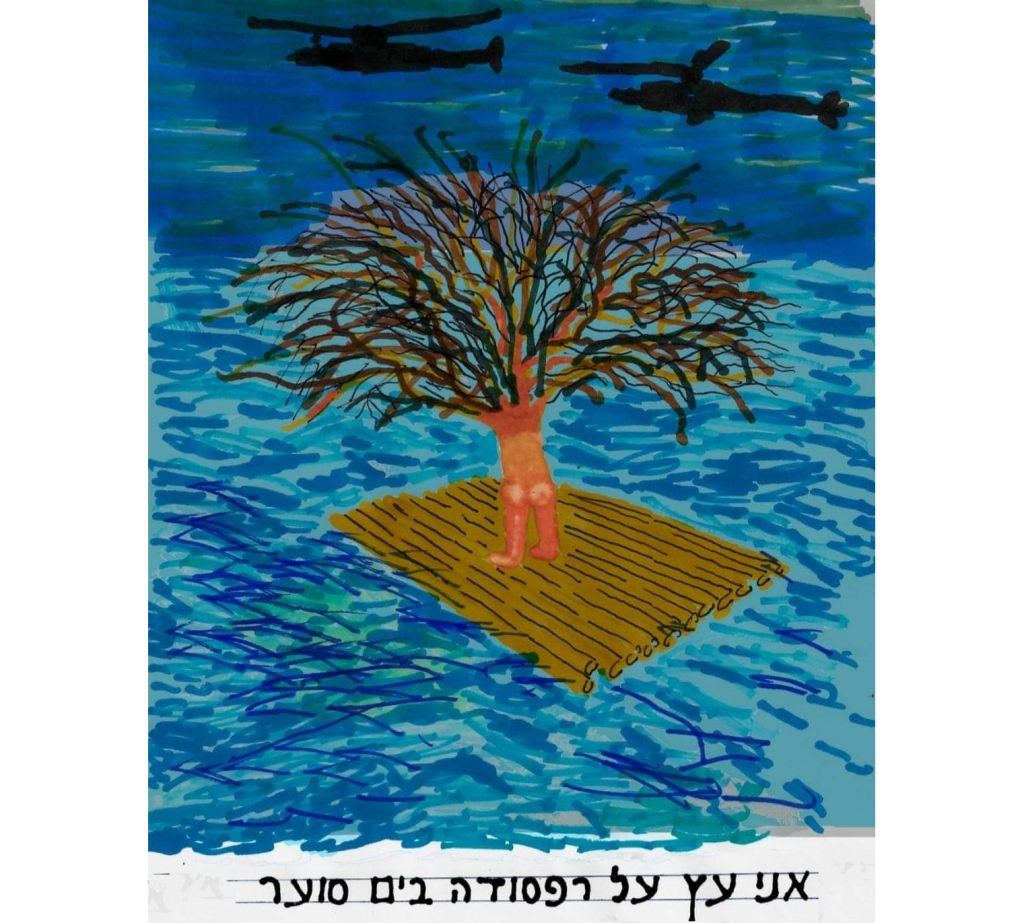
The pair of articles by Orly Aflalo-Kamil and Gabi Bonwitt refers to an OFEK evening entitled “draw me a dream please” that took place in May 2024, which hosted the illustrator and activist Zeev Engelmayer. The evening was a second meeting in a series dealing with the connection between Art and Society, inquiring into the role and functions of Art in various social contexts as a channel into the collective unconscious.

Most of this edition’s illustrations are by Engelmayer, which he calls “postcards”, and which reflect – we feel – a similar movement between hope and despair as we have felt and as is expressed in the various contributions.

Our deep gratitude to all the writers and contributors, to Ilan Kirschenbaum for placing so aptly this third digital edition, and to Zeev Engelmayer for allowing us to use his vivid postcards to connect our written words with Art.
Best wishes
Shely, Yermi and Eliat
The Editorial team
August 2024

Issue #4 – January 2026

Editorial

Letting go to letting be/ “when the home is empty, it doesn’t matter who is right” 

This edition started from a big emptiness – a depressed void – emotional, intellectual, social and political. We sent the call out in a time where splits seem to persevere over any attempt at connecting, healing or rehabilitating. Inside OFEK too there were exchanges characterised by the sound of the pencils being sharpened, and that old, familiar feeling of the need to be right, toppling the need to connect and make peace, was creeping up on us. The fourth edition of Kav OFEK stalled again then into silence. 

And then, yet again and despite it all, the editorial board continued. People started sending their promised contributions, including some where the context made us feel right to revive them, or to publish them again, as part of another frame.   The house started to refill, OFEK’s intellectual home began to shape up into what would become its fourth offspring. 

What can you expect to find in this edition? The publications are very different from each other, in form as well as in content. But they do have something in common. In different ways, they all deal with memory, death and dying; the study of the past in the present, including trauma and inter-generational trauma; and the painful yet hopeful inter-generational dynamics including succession and legacy:

We have a letter from Dr Mannie Sher, an OFEK father-figure, and  a TIHR elder, who is positively busy with legacy and who has recently published his personal memoir in the form of letters to his children and grandchildren (in-person book launch on 25 January 2026). On our request, he has written one such letter of wisdom to the OFEK offspring. We have a video interview of Prof Yigal Ginat, one of OFEK’s first fathers and a role-model to the profundity of the model of GR into all systems and organisational understanding and work. Speaking poignantly to Yermi Harel, Yigal takes us through a tour-de-force of a life-long activity in health and social care informed by the GR principles and thought, and including reflections on personal loss, grief and solitude. 

A thoughtful and thought-provoking piece entitled ‘The Fourth Injury’ by Nimrod Harel suggests that technology, with the fast developments in AI, constitute the fourth injury, should Freud was alive today to have defined it (Freud identified three core narcissistic injuries to the Human species as offered through scientific developments over the centuries: cosmological, biological and psychological). This article swims across a couple of generational rivers: human development and the examination of AI – so we include two responses to Nimrod Harel’s paper, one by Dr Kobi Tadmor and one by AI itself. The other generation river is the personal one: Nimrod is the son of Dr Yermi Harel, one of OFEK’s senior members as well as one of Kav OFEK’s editors. Here, the creative, fruitful, satisfying and proud-making aspects of succession and generational discourse. 

The contribution from Batel Friedman is a self-reflection on the experience of being an Other, in OFEK, and the pain and vulnerability that accompany. It is a striking article that highlights that “even” in OFEK, that is supposed to be an inclusive and pluralistic society, the experience of Otherness, and othering is very alive. Bat-El is a younger member of OFEK both by age and by years of membership so here, again, the dynamic of the generations appears. 

Gali Goren (et al) describes and reflects on two workshops conducted ‘under fire’ during 2025 with the primary task of digesting experiences of separation and endings, as a result of war. The work was commissioned by a charity called ‘for tomorrow’ that asked the team to run further workshops on this issue as well as on ‘moral injury’, a traumatising experience that occurs when a person is exposed to events that challenge their  values and principles, an injury that often occurs in war and conflict situations, where persons are at risk of dying.  

Yael Sharoni (et al) returns to reflect and draw lessons from a workshop alerting that corruption is not only a social phenomenon but a symptom to a deep and problematic social disease. The event took place eight years ago and feels like a premonition to what was to come. An eerie reminder of how we do not learn from our history, or past, and repeat or even expand our mistakes. 

A conversation between Gilad Ovadia, incoming and current Chair of OFEK, and Yoav Kirsch, outgoing Chair of OFEK and current Company CEO, explores the vulnerability and potential injury as one reflects on the transitions between different leadership roles. In a heart-to-heart, a man-to-man reflection shows the humanness in succession and transition. 

And finally, Orly Aflalo-Kamil rounds up the contributions to the book Sitting on a Suitcase by seven OFEK members  in a gentle and sensitively led conversation based on the book’s main hypothesis which is that Jewish identity – being an ongoing psychological experience shaped by a history of persecution, migration, and intergenerational trauma – has shaped the professional choices of the writers. 

We called for contributions in the spirit of Bion’s reverie, without memory or desire, and what has emerged is that and more, a rich tapestry of memories, re-membered experiences re-thought and re-integrated into a present which has freshness, hope and possibility in a context which could have hardly been any darker. 

We trust you will enjoy reading, watching and listening, and feel the weaving together warming you up on these cold winter nights.   


Orly, Shely, Yermi and Eliat

The Editorial Team
January 2026

מנהיגות ארגונית בימי קורונה

הובלת אפק כארגון בעת מגפה עולמית, בתוך המרחב הווירטואלי – ניווט בין יחסי הקבוצות/ מבט מתפקיד יושבת הראש

יעל שנהב שרוני

אני כותבת דברים אלה במבט מתוך תפקידי כיושבת ראש אפק בימי מגפת הקורונה. זוהי התרשמות אישית ואינה מבחינת דיווח על הנעשה בארגון בתקופה זו.
מגפת הקורונה פגשה את אפק כארגון בתקופה של פריחה. בחודש פברואר 2020 התקיימה בזיכרון יעקב הסדנה הבינלאומית, השלושים ושלוש במספר. כמחצית ממספר המשתתפים הגיעו מכל רחבי העולם. הייתה זו השנה השלישית שבה המשתתפים הבינלאומיים מהווים קרוב למחצית המשתתפים. חזון המייסדים, שראה את אפק כארגון ישראלי שיש בו עניין בינלאומי, כמיכל ללמידה ולהתנסות בתחום יחסי הקבוצות, הופך למציאות נוכחת, מתפתחת ומשמחת.

הסדנה הבינלאומית האחרונה התקיימה כשהעולם כבר ידע שמגפת הקורונה 19 COVID מתפשטת, אך קשה היה לדמיין את מהירות התפשטות המגפה, היקפה וגודל השפעתה על העולם כולו. הקבוצה שנאלצה לבטל את השתתפותה בסדנה הייתה קבוצת המשתתפים מסין – המדינה בה פרצה המגפה. משתתף אחד מסינגפור חמק לתוך הסדנה שעות ספורות לפני שהוכרז כי הבאים מסינגפור יחויבו בבידוד. הוא סומן על ידי משתתפים כמייצג את מגפת הקורונה עבור משתתפי הסדנה כולה. היה צורך לעבוד עם ההשלכות של הקבוצה הגדולה על מנת לשחרר את המשתתף מלשאת לבדו את ההשלכה של האימה מפני המגפה המתקרבת, עבור הצוות והמשתתפים.


שבועיים אחר כך כבר לא ניתן היה לדמיין שכנס בינלאומי שכזה היה יכול להתקיים. כל המפגשים הבינלאומיים הופסקו. האולימפיאדה בטוקיו נדחתה, יחד עם כל האירועים הבינלאומיים, המדעיים, המדיניים והתרבותיים שתוכננו לשנת 2020. שנה וחצי אחר כך, בעת כתיבת שורות אלה, פותח חיסון יעיל למגפה, רוב מדינת ישראל מחוסנת, זן חדש מסוג דלתא מתפשט בעולם, ועדיין לא ניתן לדמיין האם וכיצד יתקיים כנס בינלאומי דומה: בארץ או בעולם.

כיצד מנהלים פעילות ארגון חברים, שכל עניינו ביחסי קבוצות, במשך תקופה ארוכה ומעורפלת, כאשר אין כל אופק שנראה?

המעבר למרחב הווירטואלי, לזום, היה מהיר ומזמין חקירה והתבוננות. אירוע קריטי מעניין במיוחד היה יוזמה של חבר צוות מהסדנה הבינלאומית האחרונה ליזום מפגש בינלאומי בזום בתחילת אפריל 2020 עם כל חברי הצוות של הסדנה. ההיענות של חברי הצוות למפגש הייתה מיידית והנוכחות גבוהה.

מתוך אותו מפגש ספונטני של צוות הסדנה הבינלאומית עלתה יוזמה יצירתית לקיים סדנה בינלאומית וירטואלית ראשונה, שתנוהל במשותף על ידי חמישה ארגונים: אפק, טוויסטוק, א.ק.רייס, הארגון ההודי ליחסי קבוצות ואוניברסיטת אוטרכט בהולנד. הסדנה התקיימה כבר ביוני 2020, במוטיבציה ובחדוות יצירה של היזמים. הארגונים, ואפק בפרט, נתנו תמיכה מלאה לנציגים. ניהול הסדנה התקיים במשותף. עד היום לא נכתב דו”ח מסכם על סדנה עשירה ויצירתית.

יוזמה ספונטנית זו תומכת בהנחת עבודה שעלתה מתוך ההתבוננות שלי על אפק כארגון המתפקד בזמן קורונה. וכך ניסחתי זאת:

בחודשים הראשונים של המגפה, בזמן שהמבנים הקבועים של הארגון, בראשם קבוצת הנהלת הארגון, גילו תגובה איטית, הכוללת שיתוק תפקודי מסוים, הרי שמבני קבוצות בעלי אופי חדש, זמני, ולא מוכר, עם משימה ראשונית עכשווית, מצאו עצמם יוזמים, פורצים, מעזים ופועלים ביעילות, ביצירתיות ובאווירה של שיתוף פעולה.

ראיתי את תפקידי כיו”ר הארגון, באותם ימים, לעבוד עם הקבוצות היוזמות, ולאפשר למי מחברי ההנהלה שנסוגו לתוך הישרדות אישית, להתארגן מחדש.

אספת החברים הכללית, שתוכננה לסוף מרץ 2020, נדחתה. היא התקיימה למעשה רק ביולי אותה שנה, ובזום. חשבנו שהמגפה תהיה קצרה, שעוד זמן קצר נחזור לשגרה.
גם ישיבת ההנהלה בוטלה עם פרוץ המגפה. לקחו שבועות ארוכים עד שחברי ההנהלה הסכימו להיפגש בזום. המבנים הארגוניים הקבועים קפאו. כל המדינה נכנסה לסגר ראשון. נמל התעופה של ישראל נסגר.

אפק הוא ארגון חברים מתנדבים, שהקהילה המקצועית שלו רגילה להתכנס לצורך פעילויות למידה או אירועים ארגוניים, בתדירות ממוצעת של אחת לחודש.

מיד עם תחילת הסגר הראשון חשבנו שנכון יהיה מבחינה ארגונית לפנות אל החברים, אלו הנמצאים ספונים בבתיהם, מתגוננים מפני המגפה. חברי ההנהלה לא היו פנויים באותה עת לחשוב את הארגון. בשיחה אישית שהייתה לי עם האחראית על התקשורת בארגון, בתחילת מרץ 2020 עם פרוץ הסגר הראשון, החלטנו לארגן מפגש חברים בזום. צרפנו לצוות המוביל חברת הנהלה חדשה יחסית. כך הקמנו קבוצת עבודה חדשה לימי קורונה, קבוצת עבודה שלא הייתה קיימת קודם לכן, שהתגייסה למשימה העכשווית של מפגש חברים בזום. היינו מעין מטבחון זמני. שלוש נשים שהובילו את הארגון בימי המשבר הראשונים, ללא הרגלי עבודה קודמים. המבנה הזמני עזר לנו לפעול מהר ובגמישות נסיבתית. כנראה הייתה זו קבוצה שיכולה הייתה להרשות לעצמה לעבוד בתנאי אי בהירות קיצוניים, בהם קשה לראות ולהבין אל האופק.

המשימה המרכזית של המפגשים:

להעמיק את ההבנה ולתת משמעות להשפעות משבר הקורונה על היבטים שונים של חיינו, באמצעות חקירה של תחושות ומחשבות והתבוננות במתרחש סביבנו, תוך שימוש במושגים מהגישה הפסיכואנליטית-מערכתית
וכך פנינו אל החברים:

“חברי אפק יקרים,
ימים משונים עוברים עלינו, בהם אנו נעים בין חשש לבין אופטימיות בניסיון להבין את היקף ומשך ההשפעה של נגיף הקורונה, בישראל ובעולם.
המציאות המוכרת לנו משתנה במהירות, ובמיוחד בכל הקשור לנורמות קהילתיות ויחסים עם הזולת. בעת הזו, כשרובנו שוהים בבית, ברמות שונות של בידוד, חשבנו ליצור מרחב מחבר עבור חברי אפק, ולהזמין לשיח, לשיתוף בחוויות ולהתבוננות בהשפעות הקורונה. ננסה להיעזר בחשיבה הייחודית של גישת יחסי קבוצות על מנת להבין ולתת משמעות להתרחשויות .
נתכנס למפגש וירטואלי של שעה וחצי בזום, מתוך כוונה לספק מרחב, כמו בזמנים “רגילים”, לשיח, חשיבה ולמידה.
היות והמשבר הוא גלובאלי, אנו מעודדים את חברינו הבינלאומיים להשתתף במפגש. נקודות המבט השונות ממקומות שונים בעולם ודאי יתרמו ויעשירו את השיח והניסיון להבין מה מתחולל ולתת משמעות להתרחשויות. במידה וישתתפו, המפגש יתקיים באנגלית”.

היענות החברים הייתה נרגשת. אנשים הביטו זה על זה מבעד לחלונות הזום. כולם הכירו תודה על האפשרות המפתיעה להיפגש. חברים מחו”ל הצטרפו למפגש, שכן לראשונה מפגשי החברים היו זמינים עבורם, במציאות בה העולם הפך לכפר גלובלי אחד גדול. כולם בתוך ריבועי המסך, כולם בתוך הבתים, בסגר כזה או אחר. כולם מתמודדים עם המגפה ומה שהיא מביאה עמה לחיינו. החברים בקשו להיפגש שוב בקרוב. יצרנו את מפגש החברים השני, כעשרה ימים אחרי הראשון.

קשה היה להאמין. השינויים הטכנולוגיים אפשרו כבר במפגש השני להתחלק לקבוצות עבודה קטנות בסיוע הגרסה המשוכללת יותר של הזום. אם במפגש הראשון היינו צריכים לתמוך בחברים שיצליחו להתחבר, שישתיקו מיקרופונים ויתנהלו לפי כללים חדשים ולא מוכרים, הרי לקראת המפגש השני ליווינו אותם להתקין גרסה חדשה ולהתחלק לקבוצות עבודה במהלך המפגש. מבוגרים וצעירים הפכנו מיודדים ותלויים בטכנולוגיה. הפעם התמקדנו בשימוש המואץ בפלטפורמות דיגיטליות, וההשפעה על היחס לגבולות של זמן ומרחב בהקשרים שונים של חיינו.

החברים ברכו על המפגש. ניכר היה שהמפגשים עונים על צורך אנושי למגע בינאישי, להשתייכות לקבוצה. קהילת החברים המקצועית באפק קיבלה חיזוק ומשמעות. השתתפות החברים מחו”ל יצרה אתגר חדש. כדי לכלול את החברים הבינלאומיים שפת המפגש הפכה לאנגלית, והצורך לדבר באנגלית הקשה על החברים הישראליים להרגיש בנוח בביטוי רגשותיהם בעברית. מדהים היה לראות כיצד ימי הקורונה, ושבירת המסגרות הפורמליות, חשפו אותנו לפרץ יצירתיות וגמישות. לקראת מפגש החברים השני בזום, בתחילת אפריל, הקמנו קבוצת תרגום של חברים מתנדבים בוואטסאפ. מה שאיפשר למפגש להתקיים בעברית, ולחברים הבינלאומיים להשתתף.

קבוצת המתרגמים הייתה עוד קבוצת עבודה ספונטנית, חדשה, ויצירתית, בעלת משימה ברורה ואקטואלית, שהתארגנה בחודשיים הראשונים למגפה ותפקדה מצויין בצו השעה.

המפגש הווירטואלי השלישי והמסכם את סדרת מפגשי החברים התמקד במושג negative capability של ביון, מושג שהוא שאל מהמשורר קיטס. חומר הקריאה שצורף לקראת המפגש, המאמר של רוברט פרנץ’ על המושג הפסיכואנליטי negative capability בהקשר מערכתי וארגוני, וכן רקע להגדרה המקורית של קיטס המתוארת כ”יכולת של היחיד לשהות בחוסר ודאות, מסתורין וספק, מבלי לפנות בעצבנות לחיפוש אחר סיבות או עובדות”.

בימים שאחרי, בעוד ההנהלה נפגשת בזום לניהול ענייני ופגישות קצרות, העבודה בוועדות התקיימה עם תשוקה ועניין . שוב, קבוצות עבודה חדשות, קטנות יחסית, המונות שלושה-ארבעה חברים פעילים ויצירתיים.

קבוצה מעניינת נוספת, בה לקחתי חלק כחברה, החלה בהקמת הוועדה המדעית החדשה, שנהגתה על ידי הנהלת אפק עוד לפני פרוץ המגפה, ומצאה מימוש בימי הקורונה. קראנו לה, בשם לא פורמלי “הנהגות”. הייתה זו הפעם השנייה בה מצאתי עצמי בתוך קבוצה של מנהיגות, המובילה את הארגון לשלב חדש של פעילות מדעית: הפקנו סידרה של למידה מתוך סדנאות העבר. היינו חלק ביצועי בתוך ועדה רחבה ומלומדת, שעצם כינוסה עורר סערה גדולה בארגון. קבוצת הוועדה המדעית הגדולה התקשתה להבין את משימתה. הוועדה קיימה שש ישיבות במהלך 2020, אחת לחודש במשך ששה חודשים, והמליצה להנהלת הארגון להקים מחדש, בהקדם, את ‘קו אפק’, כתב העת שנסגר בחטף לפני למעלה מעשור, כמיכל מתחדש לחשיבה ולאיסוף הידע הארגוני המתהווה. כך קמה מערכת קו אפק החדש, גם היא קבוצה קטנה ודינמית המונה שלושה חברים: שניים מצוות ההקמה היו חברים במערכת קו אפק בעידן הקודם של כתב העת. הקבוצה קידמה והפיקה את הגיליון הדיגיטלי החדש הנוכחי. עוד תינוק בא לעולם באפק בימי קורונה.

הפעילות מרובה. אולי יש בה גם מן הפעלתנות. הארגון השיג יצרנות יוצאת דופן ויצירתית, עמה הגיעה גם תחושת התחרות. היו בארגון שראו בהקמת הוועדה המדעית מעין הנהלה חליפית ומדומיינת של מלומדי וותיקי הארגון. במהירות הוקמה קבוצת אופוזיציה שראתה עצמה כחתרנית ונרגשת להתכנס. הקבוצה דיווחה על קיומה להנהלה הרשמית של הארגון. אף אחד מחברי ההנהלה לא הוזמן להשתתף. גם היא לקחה על עצמה ללמוד את יחסי הקבוצות בארגון בימי קורונה. ההנהלה קיבלה הודעה שזוהי קבוצה סגורה. חברים בהנהלה העלו השערה כי זרז להקמתה היה רצון לייצר אלטרנטיבה דמיונית להנהלה המנומנמת ולהוות גוף מקביל ‘וחתרני’ כלשונם לוועדה המדעית שהוקמה ביוזמת ההנהלה.

אני רואה את עצם יכולתה של קבוצה זו להתארגן ולהפיק מאמר לקו אפק החדש, כהישג ניהולי של הארגון, שהצליח לאפשר למיכלים שונים ומגוונים ללמידה ולאיסוף הידע, לשיתוף בנקודות המבט השונות ולהכלת הקבוצות השונות בארגון.

קצרה היריעה מלהכיל, אך אציין שקבוצות פעילות נוספות קמו ופעלו בימי קורונה:

  • אפק בשטח – פרויקט של קבוצת חברי הנהלה מוועדת השיווק, שמטרתו לייצר מנגנון ארגוני יעיל ואפקטיבי להתערבות בארגונים בעלי אופי חברתי, כדוגמת בתי חולים בימי קורונה.
  • לגעת באפק – פרויקט שקם לפני כארבע שנים, המביא את מוצרי המדף של אפק ללמידה לקהל הרחב, המשיך לעבוד בזום בימי קורונה.
  • ועדת הכספים – הוקמה .
  • קבוצת למידה עצמאית של חברים שהמשיכה להתקיים בזום.
  • סדנת יחסי קבוצות שמטרתה לחקור את הלא מודע בשדה הווירטואלי.

היכולת להנהיג בצוות מוביל, שבאה לידי ביטוי באפק בימי משבר, הוכיחה עצמה גם בחברה שלנו, בהצלחה לייצר אלטרנטיבה למנהיגות שלטונית במשבר.

אסכם ואומר, כי ישנן ראיות רבות, חלקן הוזכרו כאן ורבות אחרות לא, שבזמן שהמבנים הפורמליים, כמו ההנהלה של הארגון, מתקשים להסתגל מהר לשינויים ולמשברים, הרי שקבוצות משימה חדשות, הפועלות עם מטרה ברורה ולטווח קצר יחסית, מהוות אלטרנטיבה ניהולית זמינה ויעילה להנהגת ארגון חברים בימי קורונה. היכולת לשאת פירוק של מבנה ההנהלה לתת-ועדות שונות, לצד הכלה של התנגדויות מבית ומחוץ, אפשרו לאפק להמשיך ולהתפתח בימי מגפה.

Leave a Reply

Your email address will not be published. Required fields are marked *