



ofek logo

מאמרים נוספים בגיליון

Issue #1 – October 2021

Digital KavOFEK #1

Editorial

We are delighted to launch the first digital issue of KAV OFEK.

In September 2000, the first issue of KAV OFEK was published.Avi Nutkevitch, who was the chairman of OFEK at the time, wrote, among other things, in his words of blessing:

“OFEK Writes” is of course another way to promote ideas, but it is primarily the creation of a space for the production of new ideas, for new conceptualizations, for further processing of experiences; It is another way to channel creativity; It is also another channel of communication between us and ourselves, between us and the world.”

Silvia Silberman and Ilana Litvin wrote in the editorial: After debates that ranged from excessive modesty to grandiose ambition, between the intention to publish a “dry” informative page and the desire to create a polished professional journal, the members of the committee decided to launch a journal that would encourage experiential and spontaneous writing even by those of us who shy away from writing for the established professional press.

The journal was published every year; grew, developed and expanded, and the members of its board also changed over the years. In December 2011, issue No. 12 was released, which was also the last. Since then, it fell asleep for ten years. The image of “Sleeping Beauty” waiting for the prince to come, give her a kiss, and wake her up from her slumber came up in the system.

The first thoughts about renewing KAV OFEK in a digital format, with the encouragement of OFEK’s board, came up over two years ago, even before the outbreak of COVID, and began with meetings between Sivanie Shiran and Yermi Harel. Sivanie was obliged to retire and a new editorial board was established which includes Eliat Aram, Yermi Harel and Shelly Sussman: on the editorial team of the first issues, on the editorial team of the middle issues and a newcomer to the board, respectively, hoping for a combination of old and new, tradition and innovation, an important issue in itself, in the field of group relations.

The theme of the issue, which turns the gaze to organization and organizing during the days of an epidemic, invites consideration of the effects of the epidemic on the new system that formed during this period. The digital acceleration in the days of Corona and the transformative change in the perception of location and space, removed limitations on a global society, which became “natural”. The technological tools also became “natural”, and the editors were helped by the available technology of Zoom, WhatsApp, email and shared files for the day-to-day work and communication with the article writers and other people who took part and helped in the production of the issue. Plans for an editorial meeting in Israel were canceled with the imposition of the lockdowns and movement restrictions, so that in fact, like many teams during this period, the editorial board operated in the online space and did not meet physically from its establishment and throughout the period of work on the magazine.

The Corona epidemic gave renewed validity to renewing the journal in an online format, one that is accessible and available beyond the boundaries of time, space and language, and invites expression in a variety of media and styles, such as video and visual images. As in the previous links in the KAV OFEK chain, in the renewed digital edition the wish is to provide a creative and playful space for engaging in the areas of OFEK’s knowledge, a space for conceptual and experiential expression, for collecting and processing experiences and for communication within the community of members and between it and the world.

This task is part of the contemporary challenge of searching for alternative ways and additional channels for meeting and dialogue. For example, KAV OFEK’s digital platform allows comments on the article page, as a channel of this type. Is it possible to think of a “hybrid model” in OFEK, which has some physical meetings, some online meetings and some on the online KAV OFEK? Time will tell.

The first part of the issue contains three articles dealing, from different angles, with the learning experience from online conferences or meetings about conferences. They all took place during the months of the epidemic. We opened with an piece by Ronit Kark and Miriam Shapira examining their experience as participants in the pioneer eGRC conference in 2020. The central theme, around the question or the feeling of omitting intimacy in a conference with digital authority, immediately stimulated thoughts in the editorial board and indeed we included a comment on the subject of omission by Yermi Harel.

The second piece is actually a collection of contributions from the director, staff members and participants of the online conference that took place in February 2021 and to which an OFEK evening was dedicated in June of this year, led by Smadar Ashuach and Amir Scharf, the content of which can be found here.

This part of the issue is concluded with a meta-learning article about learning from conferences through a series of Zoom meetings. The article was edited by Mira Erlich-Ginor who conducted three OFEK evenings on Zoom in the fall of 2020, between the waves of the Corona virus, with the primary task – learning from conferences. The second part of the issue also contains three articles, which deal with the question we presented in the call for proposals about OFEK as a host organization and the experience of leadership in its various shades and colors during the epidemic years.

We start with chairperson Yael Shenhav Sharoni’s view on the management of OFEK – the organization as an organization – in times of epidemic, physical distance and uncertainty.

We continue with a thoughtful article from an OFEK member, Gabi Bonwitt, about the group of OFEK members that examined group relations and Corona, in which he touches on issues we will return to later – memory, otherness and foreignness.

We conclude with the contribution of Leslie Brissett, director of the program for group relations at the Tavistock Institute London, who also sent an article thinking about identity, belonging and the digital experience in the days of an epidemic from his point of view as a director. This article also provoked deep reactions among the members of the editorial board and here you will find Shelly Sussman’s response to the idea of “a person in a body”.

The third and last part of the issue is dedicated to the memory of our dear friend Judy Levy who passed away prematurely before the epidemic. The memorial evening for her death in August 2019 at Yigal Ginat’s house in Jerusalem is perhaps one of the last memories before the epidemic of OFEK members getting together, talking, crying, remembering and singing Judy.

Here you will find a collection of interviews, some recorded, some written, of friends who remember Judy; Judy’s original article from 2011, “Memory Lost and Memory Found”, with her original response and with a contemporary addition from Gabriella Braun, a memory wrapped in sensitive, responsible and loving editing by Leila Djemal and Miri Tzadok.

It seems to us that maybe Judy is our sleeping beauty, helping us wake up and wake KAV OFEK. Although unlike in fairy tales, we cannot bring her back to breathe within us, we can try and carry on as she breathes from our memories.

We hope you enjoy the issue and that its various “kisses and caresses” will inspire you to contribute in the future.

The Editors,

Shelly, Yermi and Eliat
September 2021

* The editors would like to thank first and foremost, Ilan Kirschenbaum, for his partnership and assistance in the realization of the digital edition.

* To OFEK’s board, which approved funds that helped in the realization of the issue, especially in the editing of the recorded segments.

* And of course. to all the writers and contributors – there is no journal without content.

Issue #2 – November 2022

Digital Kav OFEK#2

Editorial

We are delighted to put forward Kav OFEK’s 2022 – the second digital edition. In preparing this edition, we could identify characteristics of doing something for the ‘second time’. In the second edition of Kav Ofek in-print, in 2001, Ilana Litvin, Silvia Silberman and Eliat Aram, the then editors, wrote:
“we are all familiar with the burst of energy that comes with beginnings, with a genesis. It is much harder to generate energy in order to persevere in creating and invest in maintenance”.

These similar feelings, that accompanied the preparation of the second edition echoed the title: “on longing, movement and nevertheless”. Inspired by the famous lyrics* pointing to the “ongoing journey” and the necessity to relentlessly “keep on moving”, we have wondered – what is the meaning of ‘movement’ these days, when the journey seems to go on and on, regresses, comes to a stand-still – how do individuals, groups, organisations, societies, communities move? Where do longing for human touch and closeness meet movement and moving? Where do we find the resources to keep on moving nevertheless and despite it all?**

We have recognised the circularity of movement in OFEK in the very recent GRC which took place with TAU entitled “Being a Therapist at this time” under the leadership of Yosi Triest and Moshe Bergstein. The GRC was cancelled twice during the pandemic, the journey extended, and eventually it happened this last September with a significant number of participants. What has been the place of longing, perseverance, determination, in the success of this GRC, despite it all and nevertheless?

The articles in this edition are also characterised by the circular movement of back and forth. The first cluster includes two articles dealing with insights from the Corona years, and relate to loneliness, movement and stuckness. First, a thought piece from Shmuel Bernstein dealing with loneliness and lack of movement, and – through re-examining Baudelaire’s La Solitude- offers a new perspective to think of the “empty space”. In the second thought piece, Simon Western touches on questions of loneliness, isolation and melancholy in the digital age, and discusses them through a case study of drone pilots in the USA air force.

The second cluster includes three articles emerging directly from OFEK-related activities and Group Relations thinking. The first, by Hagit Shachar-Paraira and Eyal Etzioni, examines sensitively and from the perspective of the participant, the processes in a reading group of systemic-psychoanalytic papers, which took place over a period of four years (including during covid and lockdown and a return to in-person), suggesting a relationship between learning/study and food/feeding. In the paper “tears of an administrator” which also deals with the experience of participating, Ori Weyl shares his experience of being a GRC administrator this past July with a touching humorous style. This section concludes with a thought piece from Gilad Ovadia which examines the addition of a fourth T boundary, in addition to the original three of Task, Territory and Time. He suggests that of reality Testing, which contributes the strengthening of movement between the ideal and the real in organisational work.

This edition is sealed with the contributions of two guest writers, asking us – “moving – where to?”
Gili Yuval, poet and writer dealing with the world of work, points to the tension between loneliness and a road-trip type movement, to the longing for solitude and suggests a ‘solution’ of a journey-to-nowhere.
Coreene Archer’s thought piece responds to the ancient song “keep moving on the ongoing journey” with contemporary voices and songs and challenges us to examine for ourselves questions of choice and internal listening.

Happy reading and please do use the comment boxes to share your reflections, questions and thoughts.

The Editors,

Yermi, Eliat and Shely
November 2022
* “Ze Kore” (It Happens) / Lyrics Shmulik Kraus
** Call for Papers Kav OFEK #2

Issue #3 – August 2024

Digital Kav OFEK #3

Editorial

In Kav OFEK, is “the despair becoming more comfortable”? The papers and collections in this third edition of Kav OFEK move between despair and hope and everything in between. So has been the editorial movement in our production work. We have found ourselves sea-soring back and forth, up and down, between frustration and despair, to hope and action. Our action is articulated through talking, thinking, opening up spaces where we can reflect on our experiences and memories.

The Kav includes two papers which had been written before 7th October 2023. In the first of these, Sarah Metzer and Corinne Zeevi-Weil explore the phenomenon of silencing and shame around the detention of Palestinian children. The second paper, a thought-piece by Gilad Ovadia, inquires into the sources of authority in Group Relations organisations and looks critically at the state of authority in OFEK.

A second paper by Gilad Ovadia also explores issues regarding work in GR organisations, which are based on psychoanalytic and socio-systemic thinking. This paper, which aims to understand the “analytic condition” in psychoanalytic-systemic work, discloses that it has been written in early 2024 and refers to the polarised situation in Israel, whilst stating the importance of the workspace, and the necessity of preserving the vitality of the analytic state.

The rest of the contributions directly relate to the events on – and following from – the 7th October 2023:

Simi Talmi shares her ‘live’ journal reflecting on the entry and integration of displaced survivors from the Otef Gaza communities into her own kibbutz community.

A recorded conversation with Leila Djemal on her contribution to the response effort and rehabilitation work with the Thai workers from the Otef sheds understanding about relationships between groups and other circles of influence that are shifting and expanding Israeli society’s borders.
A collection of thoughts and reflections from members of the Tavistock Community following an evening they called “Many Wars, One Peace – Many Lands, One Home”. The writers are from a range of countries including South Africa, Italy, USA, Canada, The Netherlands, Lithuania, UK and Israel. They bring various perspectives on their experience of borders, rights and conflict, both in preparation and during the event.

The pair of articles by Orly Aflalo-Kamil and Gabi Bonwitt refers to an OFEK evening entitled “draw me a dream please” that took place in May 2024, which hosted the illustrator and activist Zeev Engelmayer. The evening was a second meeting in a series dealing with the connection between Art and Society, inquiring into the role and functions of Art in various social contexts as a channel into the collective unconscious.

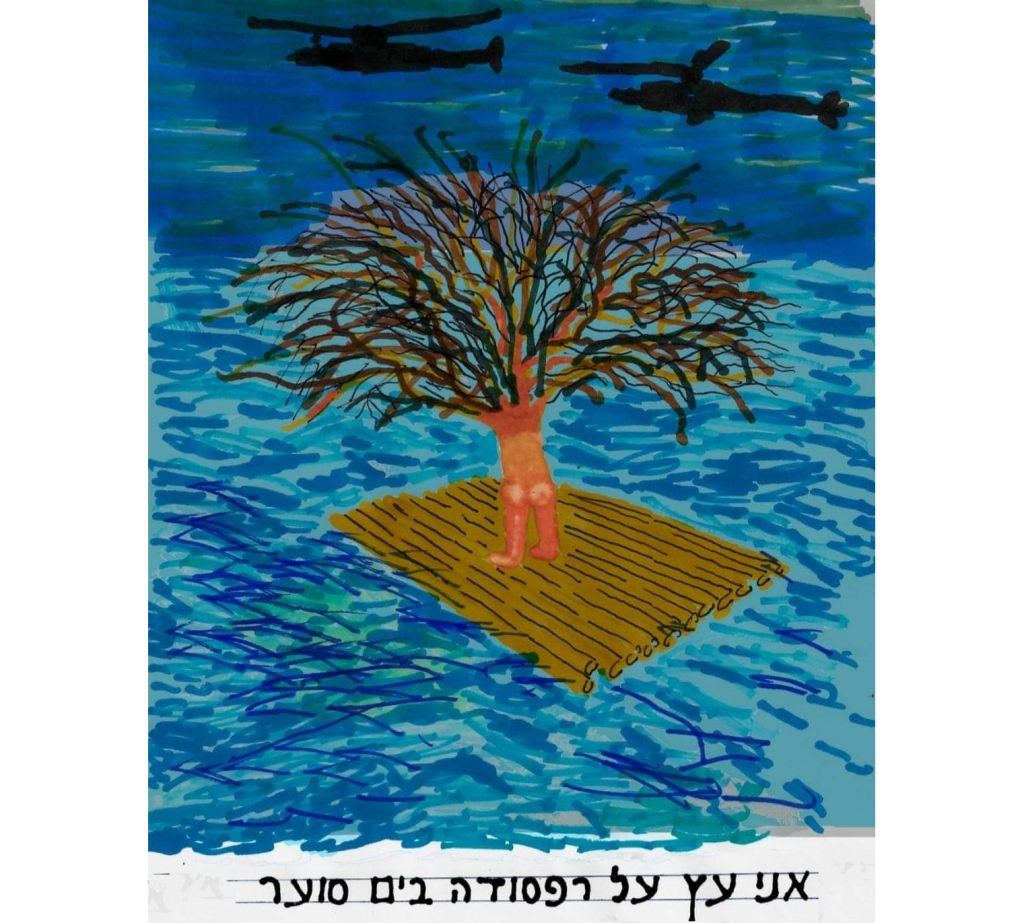
Most of this edition’s illustrations are by Engelmayer, which he calls “postcards”, and which reflect – we feel – a similar movement between hope and despair as we have felt and as is expressed in the various contributions.

Our deep gratitude to all the writers and contributors, to Ilan Kirschenbaum for placing so aptly this third digital edition, and to Zeev Engelmayer for allowing us to use his vivid postcards to connect our written words with Art.
Best wishes
Shely, Yermi and Eliat
The Editorial team
August 2024

Issue #4 – January 2026

Editorial

Letting go to letting be/ “when the home is empty, it doesn’t matter who is right” 

This edition started from a big emptiness – a depressed void – emotional, intellectual, social and political. We sent the call out in a time where splits seem to persevere over any attempt at connecting, healing or rehabilitating. Inside OFEK too there were exchanges characterised by the sound of the pencils being sharpened, and that old, familiar feeling of the need to be right, toppling the need to connect and make peace, was creeping up on us. The fourth edition of Kav OFEK stalled again then into silence. 

And then, yet again and despite it all, the editorial board continued. People started sending their promised contributions, including some where the context made us feel right to revive them, or to publish them again, as part of another frame.   The house started to refill, OFEK’s intellectual home began to shape up into what would become its fourth offspring. 

What can you expect to find in this edition? The publications are very different from each other, in form as well as in content. But they do have something in common. In different ways, they all deal with memory, death and dying; the study of the past in the present, including trauma and inter-generational trauma; and the painful yet hopeful inter-generational dynamics including succession and legacy:

We have a letter from Dr Mannie Sher, an OFEK father-figure, and  a TIHR elder, who is positively busy with legacy and who has recently published his personal memoir in the form of letters to his children and grandchildren (in-person book launch on 25 January 2026). On our request, he has written one such letter of wisdom to the OFEK offspring. We have a video interview of Prof Yigal Ginat, one of OFEK’s first fathers and a role-model to the profundity of the model of GR into all systems and organisational understanding and work. Speaking poignantly to Yermi Harel, Yigal takes us through a tour-de-force of a life-long activity in health and social care informed by the GR principles and thought, and including reflections on personal loss, grief and solitude. 

A thoughtful and thought-provoking piece entitled ‘The Fourth Injury’ by Nimrod Harel suggests that technology, with the fast developments in AI, constitute the fourth injury, should Freud was alive today to have defined it (Freud identified three core narcissistic injuries to the Human species as offered through scientific developments over the centuries: cosmological, biological and psychological). This article swims across a couple of generational rivers: human development and the examination of AI – so we include two responses to Nimrod Harel’s paper, one by Dr Kobi Tadmor and one by AI itself. The other generation river is the personal one: Nimrod is the son of Dr Yermi Harel, one of OFEK’s senior members as well as one of Kav OFEK’s editors. Here, the creative, fruitful, satisfying and proud-making aspects of succession and generational discourse. 

The contribution from Batel Friedman is a self-reflection on the experience of being an Other, in OFEK, and the pain and vulnerability that accompany. It is a striking article that highlights that “even” in OFEK, that is supposed to be an inclusive and pluralistic society, the experience of Otherness, and othering is very alive. Bat-El is a younger member of OFEK both by age and by years of membership so here, again, the dynamic of the generations appears. 

Gali Goren (et al) describes and reflects on two workshops conducted ‘under fire’ during 2025 with the primary task of digesting experiences of separation and endings, as a result of war. The work was commissioned by a charity called ‘for tomorrow’ that asked the team to run further workshops on this issue as well as on ‘moral injury’, a traumatising experience that occurs when a person is exposed to events that challenge their  values and principles, an injury that often occurs in war and conflict situations, where persons are at risk of dying.  

Yael Sharoni (et al) returns to reflect and draw lessons from a workshop alerting that corruption is not only a social phenomenon but a symptom to a deep and problematic social disease. The event took place eight years ago and feels like a premonition to what was to come. An eerie reminder of how we do not learn from our history, or past, and repeat or even expand our mistakes. 

A conversation between Gilad Ovadia, incoming and current Chair of OFEK, and Yoav Kirsch, outgoing Chair of OFEK and current Company CEO, explores the vulnerability and potential injury as one reflects on the transitions between different leadership roles. In a heart-to-heart, a man-to-man reflection shows the humanness in succession and transition. 

And finally, Orly Aflalo-Kamil rounds up the contributions to the book Sitting on a Suitcase by seven OFEK members  in a gentle and sensitively led conversation based on the book’s main hypothesis which is that Jewish identity – being an ongoing psychological experience shaped by a history of persecution, migration, and intergenerational trauma – has shaped the professional choices of the writers. 

We called for contributions in the spirit of Bion’s reverie, without memory or desire, and what has emerged is that and more, a rich tapestry of memories, re-membered experiences re-thought and re-integrated into a present which has freshness, hope and possibility in a context which could have hardly been any darker. 

We trust you will enjoy reading, watching and listening, and feel the weaving together warming you up on these cold winter nights.   


Orly, Shely, Yermi and Eliat

The Editorial Team
January 2026

סדנה מקוונת

12 דקות על סדנה מקוונת

הקופים של הרלו, קהות חושים, מומולדת וכלומיות (Nothingness)

דפנה בהט

אפתח את דבריי, איך לא, בהסתייגות: הופתעתי כשראיתי את המשימה של הערב, לחקור את השפעות העבודה בזום על דינמיקה ארגונית. האם מסדנה אחת אנחנו יכולים כבר לגזור תובנות על ההשפעות המקוּונות על דינמיקה ארגונית? אני לא בטוחה. אני יכולה לדבר אולי על הלמידה בסדנה.
במשימה של הסדנה היה: “לחקור את ההשפעות המודעות והלא מודעות של עבודה מקוונת על סמכות, מנהיגות ודינמיקה ארגונית”. נוכחנו בבלבול שהיה סביב המשימה הזו גם בהזמנות לערב אפק בנושא.
נראה לי שבסדנה היה אפשר לחקור את הסמכות, המנהיגות והדינמיקה, ואפשר היה להתבונן על השפעות העבודה המקוונת (אנשים דיברו על החוויה מול הזום) אבל יותר מכל היה קשה לחקור את השפעת העבודה המקוונת על סמכות, מנהיגות ודינמיקה ארגונית, וזאת, למרות המאמץ של אבי נוטקביץ’ לעזור לכולנו להחזיק את המשימה הזו בראש, ולמרות שכמעט כל השמות של הקבוצות באירוע הארגוני עסקו לכאורה בנושא זה1. אולי כי הדברים עוד חדשים, שכן אנחנו בתוך מעבר ואין לנו מספיק נקודות להשוואה, ואולי בשל החרדה להסתכל על כך באמת.
לפעמים אפשר היה לחשוב שמשימת הסדנה הייתה להתגבר ולנצח את הזום, להצליח להיות קרובים ולהכחיש את השפעת המקוּוַנות עלינו (דובר על כמיהה לחיבורים), יותר מאשר לחקור מה היא עושה לנו בהקשר של סמכות ומנהיגות. ממש כמו היחס לרגשות, ואפילו ללא מודע – לפעמים יש מחשבה שצריך להתגבר עליו, להשתלט עליו ולא לחקור אותו. האם ייתכן שזה גם היחס לסמכות ולמנהיגות?
לפני יותר משנה, לאחר ששימשתי כיועצת באירוע מקוון2 פרסמתי בלינקדין3 שני עמודים שכותרתם הייתה: “אנשים הם אנשים הם אנשים, דינמיקה היא דינמיקה היא דינמיקה, ובכל זאת!”, and yet…
אני חושבת שהכותרת הזו יפה גם לדברי היום (ואתייחס בדברי הן לאירוע במאי והן לסדנה המקוונת של אפק).
לפני האירוע ההוא לא הייתי בטוחה במסוגלות שלי לתת משמעות להתרחשויות. הרמזים שיש לנו בעבודה המקוונת הם פחותים מאשר במפגש פנים אל פנים – סדרי ישיבה, מבטים בין אנשים, גלגולי עיניים, התחושה הפיזית שבה הקבוצה עוטפת אותי כגוף או חודרת אל נימַי ושדרכה אני מרגישה – כל אלה חסרים. עבורי זה היה אתגר וגם הזדמנות לראות אם אני מצליחה להציע השערות משמעותיות מתפקיד היועצת.
אז כן – גם בזום – הדינמיקה הורגשה מיד ואפשר היה לעבוד4. מסתבר שכל ההנחות הבסיסיות יודעות ‘להרים ראש’ ולחצות את גבולות המעבר מתלת-הממד אל הדו-ממד. אז מה זה ה”בכל זאת”? ה”and yet”? מה שונה?
אתייחס לכמה נקודות:

  1. נקודה ראשונה – בחירת האוכלוסייה ושאלת ההחזקה והשליטה
    יש עוד היבט שהיה משותף לשני האירועים שאני מדברת עליהם: בשניהם הוזמנו אנשים שכבר השתתפו בסדנת יחסי קבוצות, ולא מעט מהם (כולם באירוע הראשון) היו מקהילת יחסי הקבוצות.
    מה אפשר לגזור מסדנאות שלא נוכחים בהן אנשים שזוהי להם הסדנה הראשונה? אפשר כנראה לגזור מזה לגבי ארגונים פחות זמניים, שזו שאלת החקירה לערב אפק, אבל לא בטוח שניתן לגזור מכך לגבי פוטנציאל הלמידה מסדנאות.
    אנחנו נוהגים לומר שהארגון הזמני של סדנה מדמה את הארגונים שבחוץ. על בסיס זה ניתן לשאול את שאלת החקירה של ערב אפק. אבל הסדנה שונה מהארגונים שבחוץ לפחות בממד אחד: הסדנה היא ארגון שמזמין רגרסיה באופן מודע ומכוּון ואילו ארגונים אחרים בדרך כלל לא. כדי שהרגרסיה תהיה בשרות הלמידה נדרשת החזקה טובה. אני מבינה את העובדה שאבי כמנהל הסדנה המקוונת וגם מנהל האירוע השני שאני מתייחסת אליו, הזמינו מלכתחילה רק אנשים מנוסים ביחסי קבוצות, כמשקפת את החרדה מקשיי ההחזקה וההכלה; כסוג של צורך בשליטה – מאנשים מנוסים שבוחרים להשתתף שוב בסדנה נדרשת מעט פחות negative capability מאשר ממי שזוהי להם הפעם הראשונה. לאנשים מנוסים, ובוודאי אלה מהמילייה של יחסי קבוצות, יש יותר מחויבות להצלחת הפרויקט, או כלפי הקולגות שלהם או כלפי מה יחשבו עליהם, במובן, למשל, של היעדרות מהסדנה או בריחה מוחלטת ממנה. עדות אחת לכך היא משתתף מהקהילה ששלח וואטצאפ למנהלני הסדנה לומר לי שאני בתוך מסגרת של ‘גריל’ מתוך, כנראה, צורך לשמור עליי5.
    אז מהבחירה של מנהלי הסדנאות לעבוד עם אנשים מנוסים אני מסיקה שלפחות עבור הדור שלנו (שם כללי, כנראה לכל מי שמעל לדור המילניום?) המקוּוַנות מעלה חרדה מפני חוסר שליטה, חוסר גבולות וקושי בהחזקה. אין מה לעשות, גם אם כבני אדם ננסה, בעזרת הטכנולוגיה, להכחיש את היותנו בני אדמה ואת תלותנו בגופני ופגיעותנו – הרי שאנחנו לא רק מחשבות שנפגשות דרך המסך וחוצות את המגבלות הפיסיות. התקווה שבקרוב נהיה בלי גוף מוקדמת מדי. כולנו הקופים של הרלו: מגע עם אמא אמיתית הכי טוב, פחות מזה בובה פרוותית, פחות מזה בובה מפלסטיק. לביטחון שמושג דרך נוכחות פיזית אין כנראה תחליף.
    לניסיונות לפצות על הקושי בהחזקה דרך אולי, שליטת יתר, היו עדויות נוספות בסדנה; למשל הבקשה להשתיק מיקרופונים של מי שאינו מדבר. למשל, דומני שמהר יותר מאשר בסדנאות פנים אל פנים היו התערבויות חד משמעיות ברמה האישית מול משתתפים ולא באופן פרשני (כמו משתתפת שנאמר לה מחוץ לגבולות הסדנה לדאוג לסודיות בחדר בו היא עובדת).
    דוגמא נוספת היא היחס למידע באירוע הארגוני. בסדנאות רגילות ישנה תמיד סכנה שהצורך לדעת את מצב המערכת (מי באיזה חדר) יהפוך לאקט של שליטה ויגבר על הצורך להבין. בסדנה המקוונת היה אפשר לראות בכל רגע נתון איפה כל אחד נמצא וזה הפך לממכר. במקום לחשוב, בהינו במסך וראינו את תנועת האנשים בין החדרים. זה היה נראה כמו התמכרות לגלישה באינטרנט בצרוף FOMO6 – המון מידע, שלא בטוח שיש בצידו חשיבה מרובה.
    בהצצה המוגבלת שלי לארגונים גלובליים – יש לי הרגשה שבחלקם, יש עיסוק רב בתכנון ברמה רבעונית, בהצגת היעדים והתוצאות – ופחות מזה בעבודה עצמה. מובן שאין קשר בין מה שתוכנן והוצהר לבין מה שהושג בפועל. האם ייתכן שצורכי השליטה המוגברים, שמושפעים מכך שלא רואים את העובדים פנים אל פנים, פוגעים בחשיבה?
  2. נקודה שניה – זיווג וכוח
    בשני האירועים נוכחנו בהופעה רבה יחסית של ההנחה הבסיסית זיווג (Ba Pairing). האם זה הושפע על ידי המדיום? דרך המחשב קשה יותר להרגיש את הקבוצתיות של הקבוצה, או במושגיו של ביון – קשה לפנטז את תכני גוף האם שהקבוצה מדמה במפגש פיזי7. האם בשל כך הקשב הולך לפנטזיה של היות קשור בכל פעם רק לריבוע אחד על המסך, מה שהופך את הנחת הזיווג לנגישה יותר?
    האם זה הושפע מהטראומה שכולנו חווים בהקשר של הקורונה במובן של הצורך בהנחה הבסיסית זיווג בשל התקווה הטמונה בה? (יחד עם חוסר האונים שאנו חשים ושמביא לפאסיביות המגולמת בזיווג)?
    האם זה הושפע מהמרכיב המציצני (וויאריסטי) שמעוּדַד על ידי המסך ושיכול למצוא מוצא יחסית סודי ונוח? (אנשים דיווחו שהם עושים Pin8 על תמונה של מישהו/י ומסתכלים עליו/ה מקרוב מבלי שהוא או היא יכולים לדעת זאת). פנטזיית הצצה זו עשויה להיות קשורה לסצנה הראשונית, Primal Scene, שקשורה אף היא להנחת הבסיס זיווג.
    האם זה הושפע על ידי הקבוצות המנוסות שנתקבצו בשני האירועים ועל ידי כובד האמביציה כלפי עולם יחסי הקבוצות שנתכנסה בהם? בשני האירועים ניכר הניסיון של המשתתפים להזדווג ולהתחבר לדמויות החזקות פוליטית בעולם יחסי הקבוצות שנכחו, וכמו לזכות בקרבה אליהן. בשני האירועים השמות של יחידים חזקים אלה הוזכרו לא מעט. אולי הפנטזיה היא שבזום אפשר יותר להסתיר את הנהייה שלך כלפי מישהו או מישהי מסוימים. האם ייתכן שלזה חבר ניסיון שלא להיכנס להנחות הבסיסיות הטריוויאליות יותר של תלות ולחימה בריחה, מה שיכול היה להיות מביך מעט לקבוצת משתתפים מנוסה המונחית על ידי יועצים שהם קולגות? ומשם הדרך לזיווג סלולה כמו השביל אל החופה?
    אולי ואולי לא. והאם נראה בארגונים בחוץ תופעה דומה של נטייה כלפי הנחת הבסיס זיווג? זה נראה לי כאחד הנושאים המרתקים להמשך חקירה.
  3. נקודה שלישית –מומולדת וכלומיות, Nothingness:
    באחד מהערבים משתתפת, שחשפה את פגיעותה לא מעט, יזמה מסיבה. היא פרסמה על לוח שלא היה בו שימוש רב. כל הערב חרדתי מ’הקיץ של אביה’. חששותיי התממשו. וראה זה פלא, כלת המסיבה הייתה כמעט אדישה לכך ביום שלמחרת, ושמה את תחושת הדחייה על הכשל הטכני.
    כן, בזום קל לומר, כמו בשירו של נתן זך, “כשהלכה ממני נערתי”:
    “יֵשׁ רֶגַע כָּזֶה:
    אָדָם נִכְנָס וְיוֹשֵׁב
    וְאִלּוּ אַחֵר חוֹשֵׁב
    שֶׁרַק רוּחַ סוֹבְבָה אֶת הַדֶּלֶת
    אוֹ אֲפִלּוּ לֹא זֶה.”
    במלים אחרות, יש נגישות רבה לשימוש בהנחה הבסיסית Nothingness9, כלומיות, שזיהיתי וטבעתי; אפשר לומר שכלום לא חשוב, הכל כרגיל, אין מה להרוויח ואין מה להפסיד מעבודת הקבוצה.
    במפגש הראשון של קבוצת הלמידה הגדולה פירשתי שהקבוצה הגדולה רוצה להתחסן מפני הרעב. נראה שהטכנולוגיה מאפשרת ואף מעודדת כניסה קלה ל- Nothingness כהגנה. אנחנו לא רעבים וממילא אין פה מה לאכול.
    התחושה היא קצת כאילו הכל שם, כל הרגשות והתהליכים, אבל הכל, רוב הזמן, קצת חיוור. לא שאין אפשרות להתחברות באמצעים מקוונים ואף להתרגשות, אבל קל מאד ללכת להגנה מאלחשת. אחד החלומות בסדנה היה על איש שפותחים את ארון הקבורה שלו והוא חי.
    ויש הרבה אמצעים שיכולים לעזור לכלומיות – אחד מהם הוא עצם החלשת הסדנה כארגון זמני אך טוטאלי (היעדר ההיבט של השהות של כמה ימים במלון מנותק), ואחד מהם הוא מִקבול שמשאיר אותך לא נוכח באף אחד מהדברים שאתה עושה. ברגע מסויים בסדנה חשבתי שאפילו המוות יכול להיות הגנה כנגד המוות – התחיל עיסוק במתים שהרגיש כמו ניסיון להעיר משהו ישֵן. באים לזום כדי לגעת ולהינגע (כך דיווחו), אבל קל לברוח ובורחים, קל לומר ‘לכלום אין ערך’ ואכן הכל קצת מאבד מערכו; אזי מגייסים את המוות על מנת לחיות.
    באופן אישי יכולתי להרגיש זאת גם לאחר הסדנה. בדרך כלל אחרי סדנה יש לי, מה שאני מכנה ‘שינה צנטריפוגלית’. הרבה חלומות, שברי חלום ותמונות, רכיבי ביטא שכמו עפים החוצה ממני בתנועה סיבובית של התנקות מהשלכות והסרתן. גם בסדנה המקוונת היתה צנטריפוגה, אבל רבע כוח…
    כוח ההשטחה הוא עז ובעיניי אף מסוכן. לאחרונה היתה לי פגישה פנים אל פנים עם מטופלת שהתחילה את הטיפול פנים אל פנים ושמזה זמן מה, עקב המעבר שלה למקום מגורים מרוחק, אנחנו נפגשות באופן מקוון. כשהיא יכולה היא מגיעה לקליניקה. קלטתי שבתחילת הפגישה אני מרגישה כאילו לא קרה דבר, הרי נפגשנו בכל שבוע כל העת הזו, ורק אט אט במהלך הפגישה כמו הבנתי את הקרבה הפיסית והרשיתי לעצמי לחוש אותה ולהתרגש. נעשיתי ערה למשמעות החדר שעוטף את שתינו כמו ממברנה נעימה, לשני הגופים (הנשיים) שנמצאים בחדר ואולי מדברים אף הם זה עם זה, לנוכחות השלמה יותר שיש לכל אחת מאיתנו ולקרבה. לקרבה. המחשבה הזו שאנו עלולים לסגל, שבאמת אין הבדל בין מפגש פנים אל פנים למפגש מקוון נראית לי קשורה להגנה של ה- Nothingness ומסוכנת למין האנושי.

אז לסיכום, מה אני אומרת על השפעת המקוּוַנות על הדינמיקה הארגונית?
אולי יותר צרכי שליטה על חשבון חשיבה.
אולי יותר הנחה בסיסית זיווג (Pairing) על חשבון ההנחות הבסיסיות האחרות.
ללא ספק יותר קהות חושית על חשבון היכולת להרגיש ולחוות, או במלים אחרות שימוש מוגבר ב- Nothingness כהגנה.

סיפא:

אני רוצה לשתף במחשבה שלא היה זמן לעסוק בה בערב אפק. המעבר לזום איפשר לנו כצוות לחקור וללוש שוב את המודל עמו אנחנו עובדים, ולשאול עצמנו: מה אנחנו עושים בדרך-כלל מתוך הרגל, מסורת ומנייריזם ומה מהותי למודל יחסי קבוצות. דוגמא אחת לכך היא שאלת גבול הכניסה לקבוצה הגדולה. בדרך כלל בסדנה פנים אל פנים רוב היועצים נכנסים לפני שעת ההתחלה ויועץ/ת אחד/ת מסמן את גבול הזמן ונכנס לחדר בזמן. תהינו מה תהיה המקבילה לכך בזום, ובכלל איך נכנסים? מחשיכים קודם מסך ואחר כך פותחים את הווידאו כאקט הכניסה? נוחתים מבחוץ פנימה (כולל הדחייה בזמן שזה עלול לייצר)? השאלות הללו הביאו אותנו לשאול מחדש למה בדרך כלל אנחנו נכנסים כפי שאנחנו נכנסים. זה אחד היתרונות שבחידושים ובבניית מודלים לא מוכרים, הם יכולים להביא אותנו לחשוב מחדש על מה שנראה כמוכר, ידוע ואף לעוס.

סיפא נוספת (נגועה בשטחיות מה):

אני רוצה לשתף בחוויה שגם לה לא היה זמן בערב אפק. בזמן שעבר מאז שאבי הזמין אותי לסדנה ועד לפתיחתה הממשית, הזמן שבו מפנטזים, הייתי צריכה לעתים כמו להזכיר לעצמי, שאין לי מה לדמיין את עצמי פוסעת במסדרונות עדן-אין. אין מה לחשוב על אריזת המזוודה וכמעט אפילו לא על מה שאלבש (ההכנה היחידה הרלוונטית לסדנה זומית היא, אולי, ביקור אצל הסַפר)10.
אילו בגדים אנחנו בוחרים לסדנאות? ואיזה מסר אנחנו רוצים ולא רוצים שהם יעבירו? לפעמים יש קוד לבוש (פורמלי ולא פורמלי). מעניין שבסדנאות שיש בהן מן הניסיון לאפשר לסובייקטיביות להפציע בדמות הסמכות האישית, יש קוד לבוש שלעתים לא שייך למקום שבו פועלים. כמה גברים בארץ שנדרשו אל הארון של אבא שלהם בחיפוש אחר הז’קט היחידי שנמצא שם, ושגם הוא נקנה לחתונה ושמור ללוויות. מה אנחנו רוצים להעביר בקוד הלבוש? יש שיגידו שאנחנו רוצים לשדר רצינות, מקצועיות, וכבוד לעבודה (ובתוך כך גם למשתתפים). אבל האם אנחנו מנסים גם להשיג סמכות באמצעות הלבוש? האם אנחנו מנסים להעמיק את ההעברה אל הצוות כאל דמויות סמכות? האם אנחנו גם מעבירים את היותנו שייכים למעמד הצוות בסדנה ולמעמד סוציואקונומי מסוים בחברה בכלל? ומה לגבי הסובייקטיביות שלנו שאנחנו מעבירים דרך האופן בו אנחנו מתלבשים: מעודכנות אופנתית, ‘מגניבוּת’, עושר, יצירתיות, רצינות, קאז’ואליות, נועזות, מיניות, ספורטיביות, ניסיון לבלוט, ניסיון שלא לבלוט, השקעה בפרטים, צעירות, ותיקות, בכירות, נשיות וגבריות, רוך, קושי ועוד ועוד. ואולי רק שיהיה נוח? אנחנו ערים למקום שהלבוש תופס בשיחות, בדרך כלל הלא פורמליות, של הצוות. נראה שזה נושא שמותר לחשוב עליו רק כבדרך אגב, למרות שהוא מעסיק אותנו וגם את המשתתפים11.
בהמשך למחשבותיי על בגדים, הבנתי את משמעות התארגנות הגוף בתפקיד: כיצד אני נושאת את עצמי בתוך גופי וכיצד עצמי נושא את גופי, ואיך הדבר משתנה בתפקידים שונים ועל ציר הזמן. מה שמאיר אריאל קרא לו “טקס בישבן”12. איך אנחנו, בחיפוש אחר הסמכות הפנימית בתפקיד נעזרים בגוף ובנגזרותיו. בזום כמעט שאין לזה מקום. האם יש דרכים מקוונות באמצעותן אנו מחליפים את התמקמות הגוף והתארגנותו? אולי בקול? אולי באופן הניסוח? נראה לי מעניין ומסובך להמשך חקירה.

1 שמות כמו: יחסי אמון עם הסמכות בזום, מו”מ בזום, סמכות בזום ופנים אל פנים, כיצד בונים יחסי סמכות עם אמון בזום וכו’.

2 Learning from Experience: Small and Large Study Groups Online, May, 15 2020.

3 https://www.linkedin.com/pulse/people-dynamics-yet-some-reflections-from-staff-role-learning-bahat/?trackingId=nITTQPed%2BCFSWrf84EV%2Fzg%3D%3D

4 באירוע ההוא אגב, מהר מאד עלתה דינמיקה של תחרות על משאבים ושל ‘קרבה לצלחת’, שניתן היה לפרשה גם בכאן ועכשיו של קהילת יחסי הקבוצות (כולם רצו להיות עם מי שנתפסו כחזקים במילייה) וגם חברתית גלובלית, כמשקפת את התחרות בין מדינות על משאבים בהקשר של הקורונה (בדיקות, מכונות הנשמה וכו’). מה שאפשר לקרוא לו MeNess של הקבוצה.

5 להרגעת הרוחות ורוחו של אותו משתתף, אציין שהשהייה בתוך מסגרת ה’גריל’ הייתה קשורה להחלטה של קבוצת היועצים לסמן ולהבחין עצמה במליאת הסיום של האירוע הארגוני כיועצים, באמצעות משחק עם הטכנולוגיה שהזום מאפשר לנו (כמקבילה לנסיון של קבוצה להבחין עצמה דרך סידורי ישיבה במליאה פנים אל פנים).

6 Fear Of Missing Out

7 “הקבוצה מתקרבת יותר מדי בתחושת האנשים המרכיבים אותה, לפנטזיות פרימיטיביות מאוד בנוגע לתכניו של גוף האם”. ביון (1961), התנסויות בקבוצות, עמ’ 127.

8 בהקשר זה איני יכולה להתעלם מדו-המשמעות העולה מהאסוציאציה של המונח הזומי Pin לעברית.

9 Bahat, (in press). Nothingness – A group phenomenon or a Seventh Basic Assumption: Does it really matter? Does anything matter at all? In: Archer, C. et al. (eds.) The Place where we Live: the space for Group Relations. Routledge: London.

10 דיון שלם אפשר כמובן לעשות בבחירת המיקום ממנו עושים את הזום, והרקע והתאורה שנבחרים.

11 ר’ דיון בלבוש בדו”ח מנהלת הסדנה הישראלית 2012 (השמלה האדומה), ובדו”ח מנהלת הסדנה הבינלאומית 2016 (הז’קט הורוד).

12 טרמינל לומינלט, מאיר אריאל.

Leave a Reply

Your email address will not be published. Required fields are marked *